
Kazakhstan to Digitally Monitor 50% of Power Grid by 2027
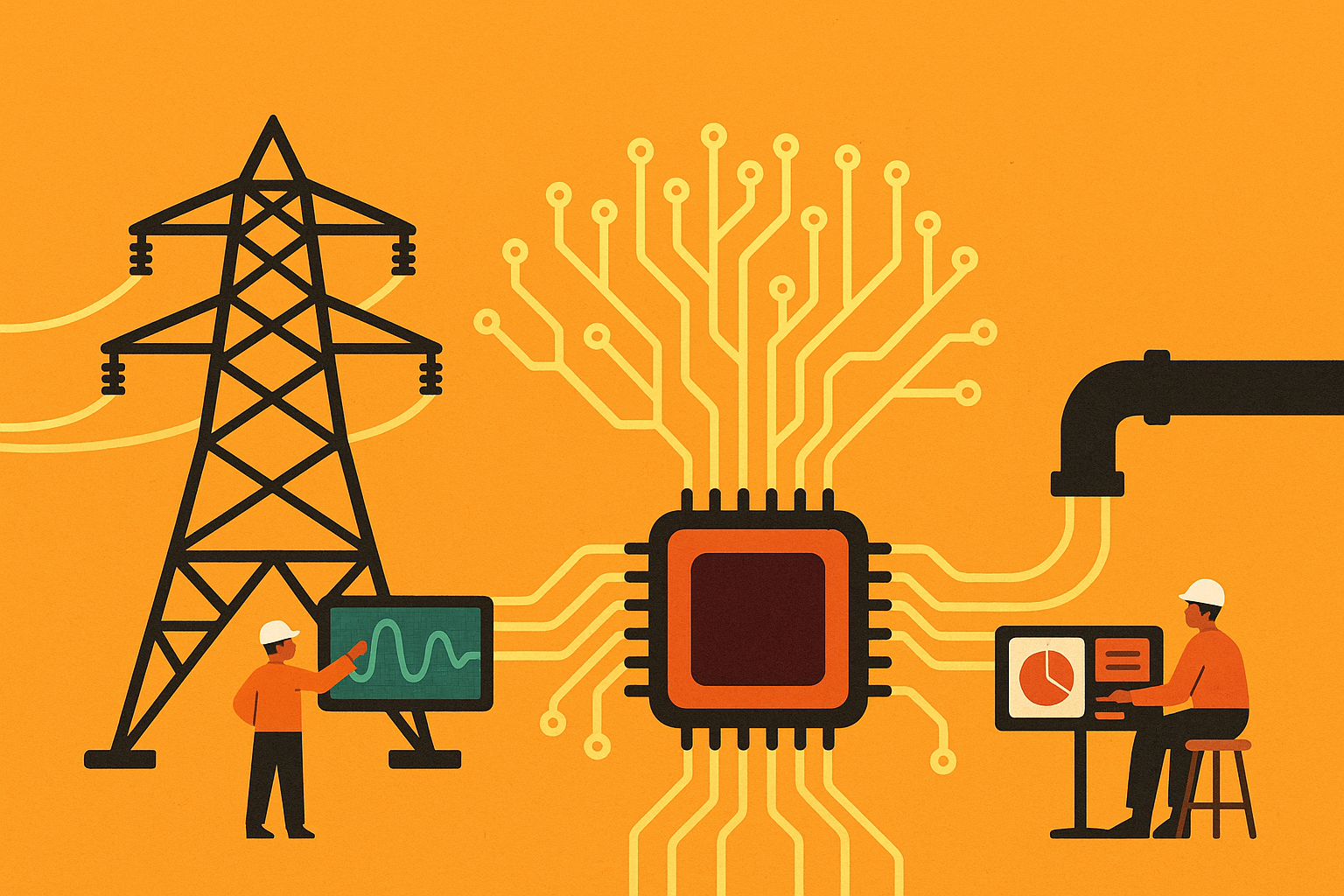
Kazakhstan's energy sector transforms with digital twins, AI, and real-time monitoring, boosting efficiency and cutting costs.
As part of its 2024-2029 energy blueprint, Kazakhstan will digitally monitor 50% of its power grid by 2027, transforming critical infrastructure into intelligent data networks. The nation is deploying advanced digital tools like AI, real-time dashboards, and digital twins to boost efficiency, enhance safety, and reduce waste. This technological overhaul is expected to lower operational costs, secure the fuel market against illegal sales, and create new tech jobs.
How is Kazakhstan using digital technology to transform its energy sector by 2027?
Kazakhstan is aggressively digitizing its energy sector through advanced tools like digital twins, AI-powered diagnostics, and real-time operational dashboards. Key targets for 2027 include bringing over 50% of energy sites under digital monitoring, achieving 99% accuracy in AI-driven defect detection, reducing oil approval times to under one day, and cutting the shadow fuel market to less than 5%.
These initiatives, transitioning from pilot programs to daily operations, are now standard practice for state-owned giants and private startups. The following metrics illustrate the rapid integration of digital technology into the energy sector.
| Metric | 2023 baseline | April 2026 status | 2027 target |
|---|---|---|---|
| Electricity & heat sites under digital monitoring | 12 % | 38 % | ≥ 50 % |
| Average oil-volume approval time | 7 days | 2 days | < 1 day |
| Defect detection accuracy (power pylons) | manual, 72 % | AI vision, 98 % | 99 % |
| Shadow fuel market share | 8 % | 6.4 % | < 5 % |
Digital twins go live
Kazakhstan is integrating digital twins to simulate plant operations, AI to automate infrastructure inspection, and blockchain-based platforms to secure the fuel supply chain. These technologies are enhancing efficiency, improving safety, and reducing illegal market activities, with a goal of digitizing half the energy sector by 2027.
Central Asia's first heavy-asset digital twin is now operational at Samruk-Kazyna Ondeu's sulfuric-acid facility in Stepnogorsk. This dynamic model processes 14,000 sensor feeds per second, enabling engineers to simulate shutdowns in virtual reality before performing physical maintenance. Projections show a 5-8% reduction in operating costs and a 2-3% decrease in safety incidents, with the $3.2 million investment expected to be recouped within 14 months.
"Every extra tonne of output we gain from the twin is a tonne we do not have to drill, flare or truck."
plant general director, Stepnogorsk
AI finds cracks faster than crews
In October 2025, a drone swarm inspected 618 transmission pylons in the Almaty corridor within 48 hours. An AI system, trained on 2,000 reference images, identified 6,947 defects - including loose bolts and cracked insulators - with 98% accuracy. This automated process replaced 30 days of manual inspections. The data, enhanced with thermal and LiDAR overlays, feeds a national "digital porthole" that allows dispatchers to prioritize critical repairs and prevent cascading blackouts.
OilTrack starves the grey market
The Ministry of Energy's OilTrack platform now connects 123 storage depots on a unified digital ledger. Digital flowmeters and QR-coded seals at each loading rack transmit data to a blockchain every 15 seconds. Since its launch in January 2026, the system has cut illegal fuel transfers by 20% and reduced truck-queue times at border depots from three hours to just ten minutes.
Smart meters wait for data cathedrals
Over 1.1 million households are equipped with smart meters, but only 42% currently provide continuous data streams. The primary obstacle is data processing capacity, which will be addressed by the upcoming Data Center Valley in Pavlodar. Set to open its first 50 MW hall in Q4 2026, this 1 GW facility will reduce grid balancing latency to under 20 milliseconds, enabling precise, second-by-second forecasts essential for renewable energy integration.
Language models learn Kazakh geology
The Al Farabium supercomputer is currently processing 220 terabytes of geological data - including well logs and seismic images - to develop KazEnergyLLM. This 70-billion-parameter large language model will answer complex drilling queries in Kazakh, Russian, and English. KazMunayGas is an early adopter, planning to integrate the model with its ABAI waterflood module to predict oil recovery efficiency more accurately, building on the module's success in boosting output by 12,000 tonnes in 2025.
"The competitive edge will belong to companies that treat data as an extractable resource long before the last barrel is lifted."
deputy prime minister at Digital Qazaqstan Forum 2026
Investors chase algorithmic barrels
Energy startups at Astana Hub generated 1.8 billion tenge in revenue in 2024, doubling their cumulative total since 2021 to 3.8 billion tenge and creating 400 specialized jobs. Attracting international interest, venture funds from the UAE and South Korea have committed $180 million for Kazakh AI pilots. This funding targets projects demonstrating a 10% increase in resource recovery or a 15% reduction in unplanned outages, mirroring performance benchmarks from North Sea digital oil fields.
Road ahead: sector data lakes and edge AI
By the end of 2026, every transmission substation is slated to be equipped with edge computing hardware. This will enable on-site AI processing, cutting data round-trip times to 5 milliseconds and freeing up network bandwidth. At its current pace, Kazakhstan is on track to have half of its energy infrastructure digitally twinned by the end of 2027 - a milestone that took Nordic countries ten years to reach.