
Kazakhstan: Digital Tax Overhaul Boosts Revenue, Formal Economy

Alexander Bazilevich is a CRM expert and Top Salesforce Partner with over 17 years of sales experience in the IT industry. He specializes in transforming corporate goals into profits through cross-functional collaboration and innovative business solutions, with deep expertise in business systems and IT products.
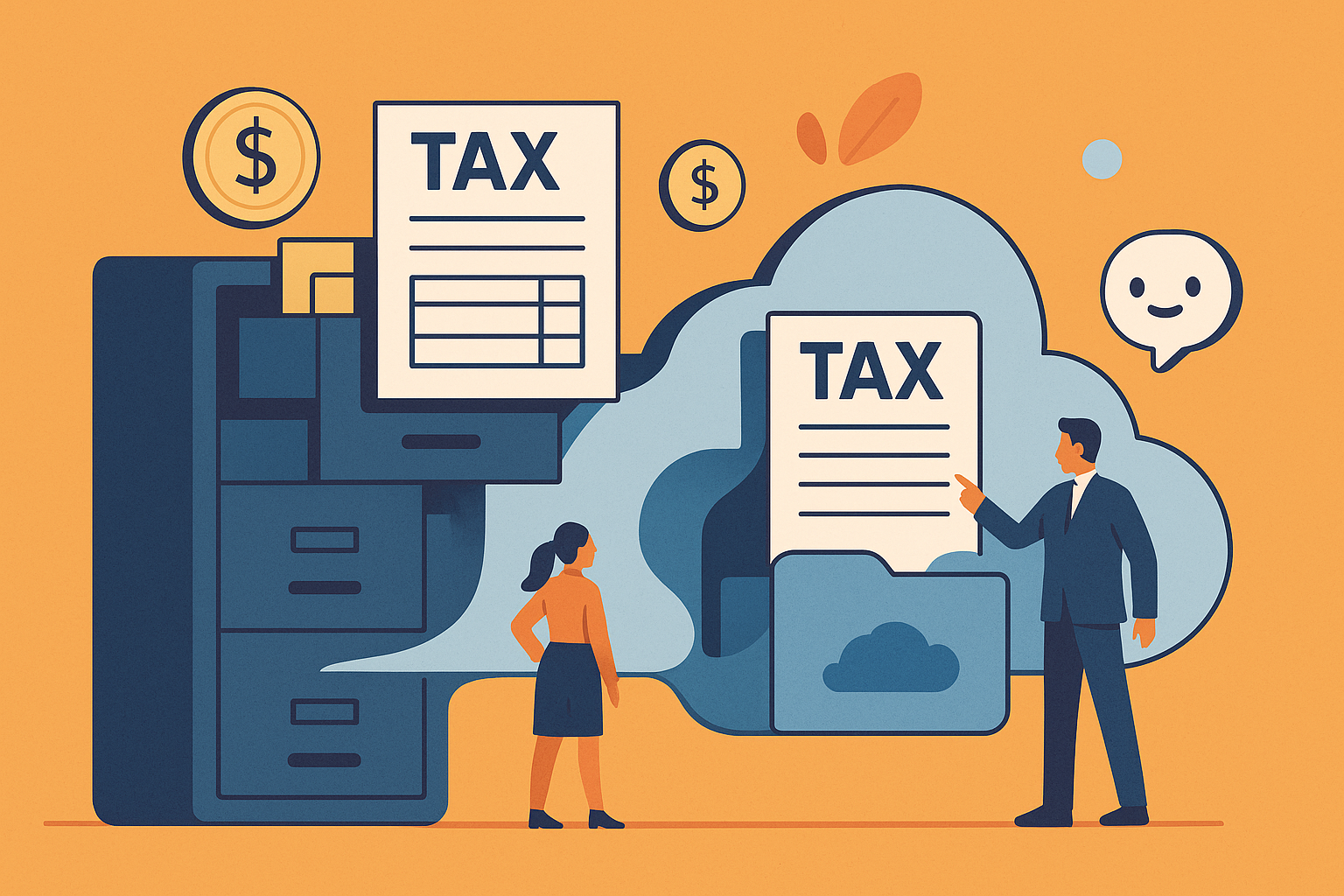
Kazakhstan's new tax code: digital transformation with cloud platforms, e-invoicing, and AI for faster, fairer taxation.
Kazakhstan: Digital Tax Overhaul Boosts Revenue, Formal Economy
Kazakhstan's digital tax overhaul is boosting revenue and expanding the formal economy through a modernization plan that fully digitized its tax system by 2026. The sweeping reforms introduced new cloud platforms for one-minute processing, simpler forms, automated reporting, and pre-filled VAT declarations. With early results showing increased tax collection, the new system aims to make compliance faster, clearer, and more efficient for all taxpayers.
What are the key changes in Kazakhstan's new digital tax system for 2026?
Key changes in Kazakhstan's 2026 tax system include faster cloud platforms, simplified forms, automated zero reporting, and pre-filled VAT declarations. The reform also introduces a big-data risk engine, a penalty-free year for small businesses, and new VAT registration requirements for foreign digital service providers.
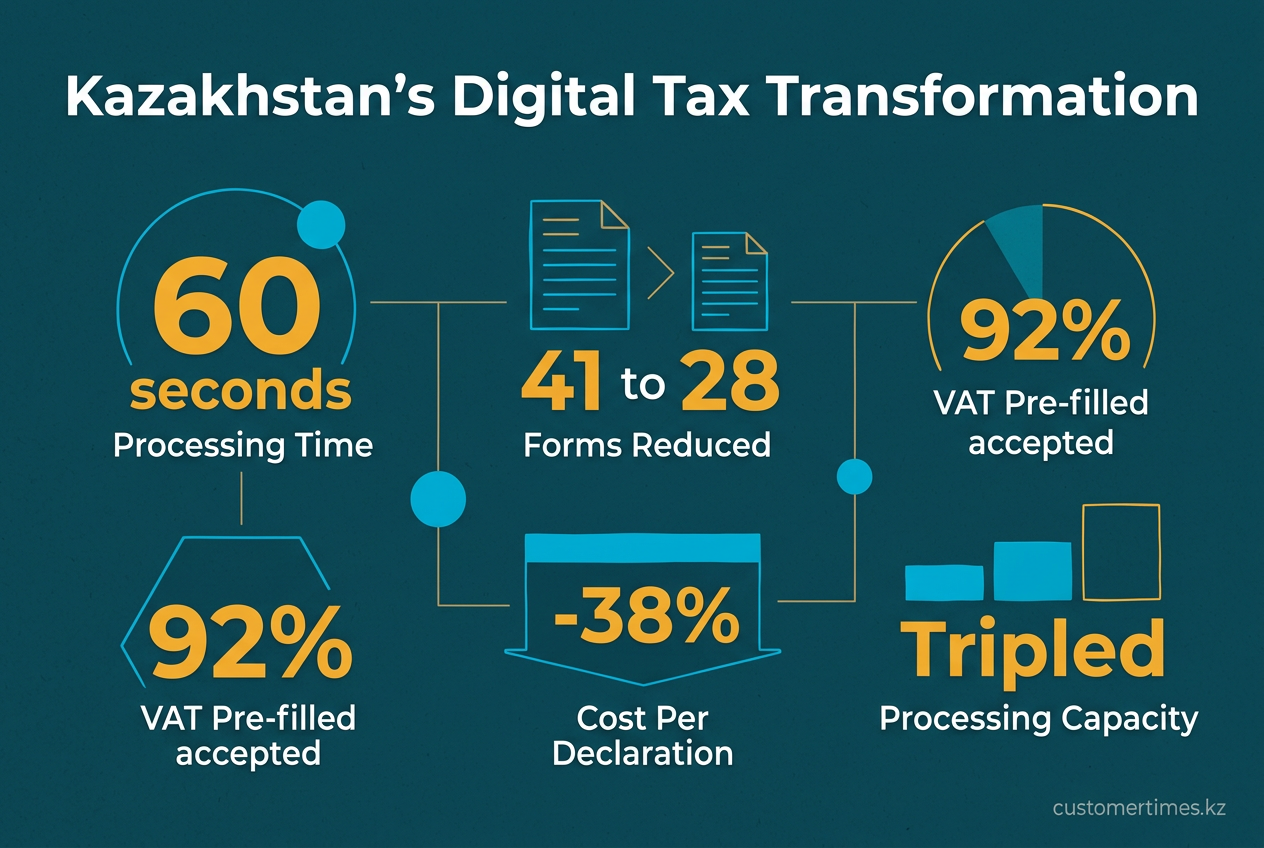
The new Tax Code took effect on 1 January 2026, and by 2 January, the State Revenue Committee launched five cloud-native platforms. These new systems now process a tax declaration in 60 seconds - down from an hour - and support 250,000 concurrent users while maintaining 1.7 million business profiles in a single master data layer. These upgrades deliver practical, daily benefits for companies operating in Kazakhstan.
"Taxation in Kazakhstan must become transparent, fair and service-oriented" - Prime Minister Olzhas Bektenov told the January 2026 government retreat that approved the penalty-free transition year for micro and small firms.
What changed on day one
- Simplified Tax Forms: The number of tax form templates was reduced from 41 to 28, eliminating redundant schedules for property, land, and vehicles.
- Automated Zero Reporting: If a filing deadline is missed, the system automatically files a nil return, ensuring accounts remain compliant without manual action.
- Pre-filled VAT Declarations: Data is automatically pulled from cash registers, e-invoices, and bank feeds. Pilot programs showed 92% of lines were accepted without edits.
- Smart Risk Management: A big-data engine analyzes data from 74 state and commercial sources to identify inconsistencies before tax refunds are issued.
This new infrastructure replaces twelve legacy systems with five modern platforms on Kazakhstan's domestic cloud. The Finance Ministry reports that this move tripled processing capacity while cutting the operating cost per declaration by 38 percent.
Transition cushion for smaller firms
For 2026, individual entrepreneurs and companies with turnover below the equivalent of €300,000 benefit from a "no-fine" year. If filings are late or contain errors, the tax office issues a chatbot alert and an invitation to a free webinar instead of a penalty. Officials aim for this soft-landing approach to encourage more of the nation's 2.4 million self-employed individuals to formalize their businesses. Since the beginning of the year, 138,000 have already registered through the e-Salyq Business mobile app.
Digital VAT reaches foreign apps
As of 1 January, foreign marketplaces selling digital goods like apps, games, or streaming services to Kazakhstani consumers must comply with new regulations. The previous simplified payment option has been eliminated. Non-resident suppliers are now required to obtain a local Business Identification Number, issue e-invoices via the e-Tamga portal, and file full monthly returns. Companies that fail to register risk having their websites blocked by the telecom regulator. The swift issuance of over 7,000 new VAT numbers to overseas firms in the first three weeks of 2026 indicates rapid adaptation by global platforms.
Life-cycle support instead of one-off filing
A unified digital counter within the taxpayer's online cabinet now manages the entire business life cycle, from registration and fiscal cash-box setup to preferential regime selection and closure. Entrepreneurs can use an eight-question calculator to receive a personalized roadmap detailing payment dates, rates, and required integrations. Twenty commercial banks have already connected their mobile apps to the cabinet, allowing users to pay taxes, social contributions, and even traffic fines with a single click.
Regional context: Kazakhstan pulls ahead
Kazakhstan's reforms place it significantly ahead of its Central Asian neighbors, where similar initiatives are still in early stages. Uzbekistan is piloting e-invoicing for large taxpayers, while Kyrgyzstan and Tajikistan remain focused on customs automation. The European Bank for Reconstruction and Development's latest Transition Report highlights that Kazakhstan is the only state in the region to have linked corporate banking, property, and vehicle registers into a unified analytical pool. This integration helped the treasury achieve 100.1% of its annual tax collection target in 2025, totaling 24.6 trillion tenge.
"Digitalizing tax systems can generate substantially more revenue due to increased taxpayer compliance, a broader tax base and more efficient administration" - Harvard Kennedy School policy brief, December 2024
What remains on the 2026 checklist
| Milestone | Deadline | Expected impact |
|---|---|---|
| Open API catalogue for third-party accounting software | 1 March 2026 | 40 certified vendors, faster SME onboarding |
| National product catalogue for e-commerce VAT matching | 1 July 2026 | Curb counterfeit trade, auto-reconcile marketplace sales |
| AI-assisted VAT refund desk | 1 September 2026 | Cut average refund cycle to five days from current 15 |
| Mandatory e-invoice for domestic B2B transactions | 1 December 2026 | Close fictitious deduction schemes |
Businesses in Kazakhstan must prepare for these increasingly integrated digital systems. Accounting software must support the new 2-D bar code embedded in every e-Tamga invoice, as banks will reject payments if purchase ledgers lack this code. Finance teams are strongly advised to test integrations now, during the grace period, as auditors will treat missing identifiers as a serious compliance failure when full enforcement begins in 2027.
Kazakhstan is betting that a faster, clearer, and more streamlined tax system will ultimately outweigh the challenges of adoption. Early data supports this confidence: January VAT inflows exceeded forecasts by 18 percent, and the shadow economy's share of retail trade fell below 24 percent for the first time. With a safety net for small businesses and powerful analytics for larger ones, the government anticipates that by 2027, digital tax compliance will be as routine as mobile banking.