
Kazakh Startup Raises $6.8M for AI-Powered Cybersecurity Expansion

Kazakh startup secures $6.8M Series B to expand its AI-powered SOC platform across Central Asia and the South Caucasus.
Kazakh Startup Raises Funding for AI-Powered Cybersecurity Expansion
A Kazakh startup has raised significant funding for its AI-powered cybersecurity expansion, securing a Series B funding round led by MOST Ventures with follow-on investments from Quest Ventures and the Eurasian Development Bank. The company's AI-driven Security Operations Center (SOC) platform, already protecting many local firms, will use the capital for a two-year push into Central Asia and the South Caucasus.
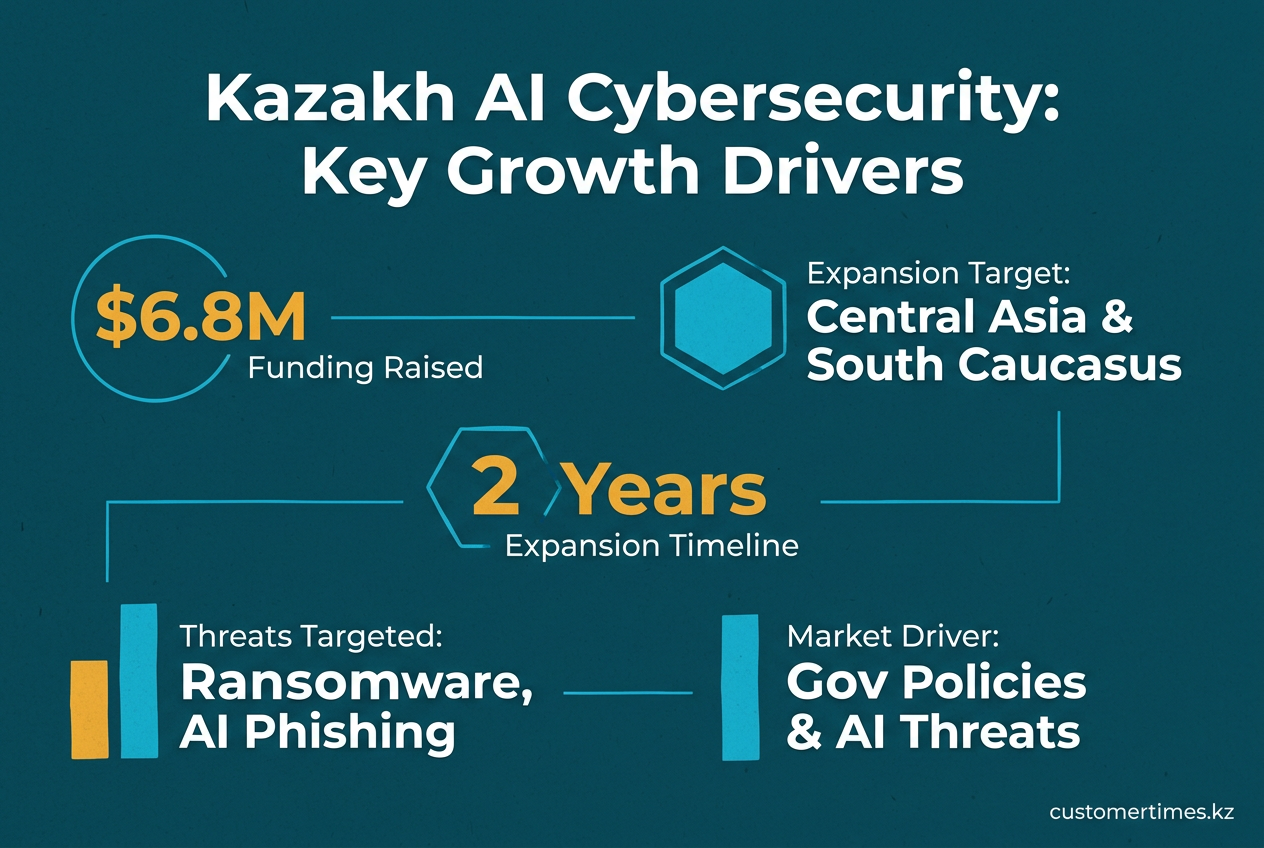
The platform's early success is built on its local-language capabilities, flexible pricing, and commitment to training regional tech talent. Initial customers report improvements in threat detection capabilities, which bolsters security and allows in-house experts to focus on more complex challenges. The expansion targets markets that CISOs say are now "wide open" for ransomware and AI-generated phishing attacks.
What is driving the growth of Kazakhstan's cybersecurity market?
According to industry reports, Kazakhstan's cybersecurity market growth is driven by government policies and regulatory frameworks, combined with rising AI-driven threats and ransomware, spurring increased domestic enterprise spending on advanced threat detection.
Kazakhstan has rapidly become a significant cyber-mature economy in the region. Government initiatives and digital transformation concepts have reportedly established networks of CERTs and compliance rules. This has compelled banks, miners, and telecom groups to invest in higher-end detection, with domestic cybersecurity spending showing significant growth according to industry analysts.
"We see substantial brute-force attempts per month inside the KZ internet space; a significant portion now come from IPs that did not exist months earlier because they are spun up on stolen cloud credits."
- Senior analyst, Kazakh National CERT
The startup's own data reveals why corporate boards are increasing budgets. For companies using its real-time behavior analytics, threat detection times have improved significantly. In contrast, firms relying on older signature-based antivirus show longer detection periods, allowing attackers more time for lateral movement into critical systems.
Competitive landscape (Kazakhstan enterprise threat detection)
The Kazakhstan enterprise threat detection market includes several major vendors competing for market share:
| Vendor | Model | Local data-residency option |
|---|---|---|
| Kaspersky Lab | Hybrid SOC + EDR | Yes |
| Palo Alto Networks | Cortex XDR cloud | Partner-hosted in Almaty |
| Local startup* | AI SOC-as-platform | On-prem + gov-certified cloud |
| Fortinet | FortiSIEM + NOC | Yes |
| Cisco | SecureX + Splunk | Routed via Moscow* |
| Others | Mix | Varies |
- Name withheld at investor request.
- Some Cisco telemetry still transits Russian IXes, complicating compliance for sanctions-sensitive clients.
Across the wider Central Asian and Caucasus region, the addressable market is growing rapidly. Uzbekistan's new hyperscale cluster and Azerbaijan's segment of the Trans-Caspian fibre route will provide low-latency connections to data centers in Astana. This new infrastructure, along with Kazakhstan's reported data center expansion goals, allows vendors to offer the in-country data storage required by personal data laws.
This expansion coincides with new dangers. According to industry reports, regional leaders say generative AI has increased their vulnerability surface, with many reporting measurable rises in fraud or phishing.
To capture this market, the Kazakh entrant plans to differentiate on three key points:
- A lightweight Russian-language large language model that flags phishing emails written with Kazakh or Uzbek cultural context.
- Per-second API billing that lets mid-size firms rent SOC capacity only during peak hours, such as when SWIFT traffic is high.
- A channel academy in Astana that trains local engineers annually to support partners in cities where certified MSSPs are scarce.
Early adopters are already validating the platform's effectiveness. One of Kazakhstan's mobile operators saw significant reductions in false-positive alerts, freeing analysts for proactive threat-hunting. A private copper miner used the platform to detect cryptojacking scripts on its SCADA network rapidly.
Investors have already earmarked follow-on capital. If customer growth continues, additional funding rounds are being considered, potentially drawing interest from global vendors in the market.