
Salesforce Shifts to Outcome-Based Pricing: Pay for Agent Tasks

Alexander Bazilevich is a CRM expert and Top Salesforce Partner with over 17 years of sales experience in the IT industry. He specializes in transforming corporate goals into profits through cross-functional collaboration and innovative business solutions, with deep expertise in business systems and IT products.
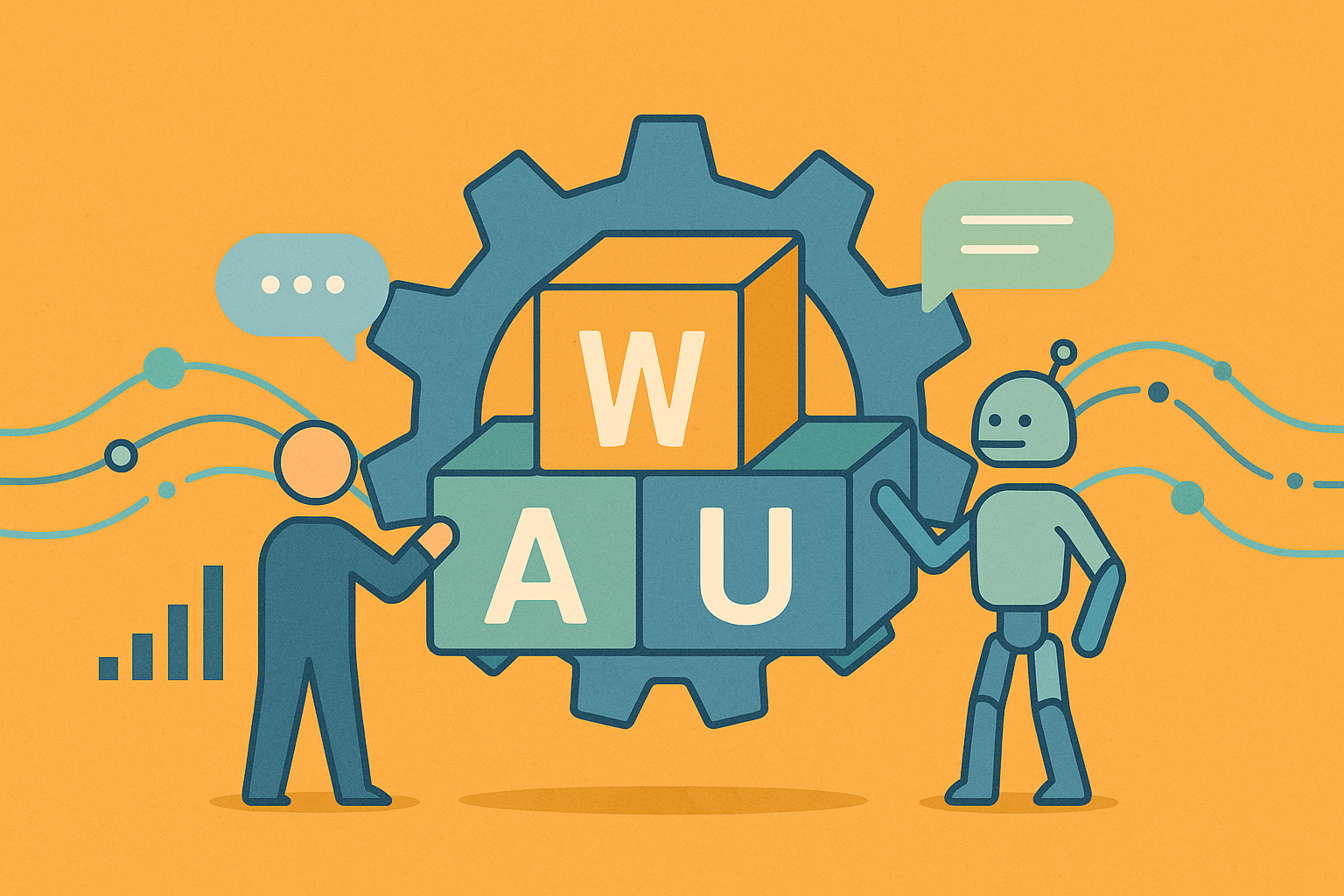
Salesforce shifts to a consumption model selling "Agentic Work Units" (AWUs), driving 50% Q/Q growth and 12% of total revenue.
Salesforce shifts to outcome-based pricing, letting businesses pay for completed agent tasks instead of user seats. This model, centered on Agentic Work Units (AWUs), allows companies to pay only for what they use, enhancing efficiency and reducing costs. Early adopters report significant savings as autonomous agents manage more tasks and improve customer satisfaction, fundamentally reshaping business operations.
What is Salesforce's new consumption-based pricing model with Agentic Work Units (AWUs)?
Salesforce has officially moved from per-user subscriptions to a consumption-based pricing model powered by Agentic Work Units (AWUs). This strategic change means customers now purchase outcomes, with each AWU representing a specific task completed by an autonomous agent, directly tying costs to business results rather than user licenses.
Salesforce's consumption-based model uses Agentic Work Units (AWUs) as its core currency. Instead of paying for user licenses, companies purchase AWUs, which are consumed each time an autonomous AI agent completes a specific task, such as resolving a support ticket or updating a sales forecast.
By March 2025, the company transitioned from its per-user subscription model to a consumption framework built on AWUs - the currency of its autonomous enterprise vision. An AWU is consumed, and revenue is recognized, every time an Agentforce agent resolves a ticket, updates a forecast, or re-orders inventory. The financial impact is clear: Agentforce closed FY26 with a $2.9 billion annual run-rate, constituting about 12% of total Salesforce revenue. The AWU business line is expanding by 50% quarter-over-quarter, while traditional Cloud license growth has slowed to single digits.
"Enterprise work is moving from automation to agency" - the Spring '26 release notes now treat Flow, Slack and Data Cloud as the neural pathways that let agents reason, remember and act without human clicks.
The technology stack is intentionally designed. Data Cloud provides a zero-copy, real-time customer graph, Tableau offers visual guardrails, and Slack serves as the "digital HQ" for agent and employee collaboration. Pilot programs demonstrate powerful results: UCSF Health agents managed 88% of pre-authorization tasks after training with 40,000 synthetic patient scenarios. reMarkable's agent handled 18,000 service conversations in three weeks, boosting CSAT by 18 points, while Wiley reported a 213% ROI as agents absorbed 40% of self-service traffic.
| Metric | FY24 | FY25 | FY26 (est.) |
|---|---|---|---|
| Agentforce ARR | $0.3 B | $1.4 B | $2.9 B |
| AWU volume | 0.8 B | 4.2 B | 9.5 B |
| Gross margin on AWUs | 78 % | 82 % | 85 % |
Consumption pricing enables limitless scalability. For example, a retailer in Kazakhstan, previously licensed for 240 Sales Cloud seats, now deploys 800 agents during peak seasons and scales down to 60 during off-peak months, paying only for executed tasks. Data Cloud's regional shard option also satisfies data-residency requirements, allowing local integrators to keep sensitive information in-country while leveraging the global agent network.
In February 2026, Salesforce executed its largest leadership overhaul since the Tableau acquisition. This refresh involved the exit of five executives, including original Agentforce GM Adam Evans, and the appointment of six new leaders focused on AI execution. CEO Marc Benioff revealed the board even considered renaming the company "Agentforce," highlighting the strategic importance of autonomous revenue. Simultaneously, 1,000 legacy support roles were eliminated, raising the FY27 margin guidance to 33%.
Salesforce's own 2026 State of of Sales survey shows 54 % of high-performing organisations already deploy agents across the full sales cycle; laggards average 11 %.
Salesforce is building its competitive advantage on three research pillars: advanced simulation environments for agent testing, agent-to-agent protocols for seamless task hand-offs, and ambient intelligence for proactive scheduling. With Gartner projecting that 40% of enterprise applications will host agents by December 2026, Salesforce aims to position its platform as the foundational fabric for this new era.
This transition also presents challenges. Early adopters noted inconsistent agent responses to identical prompts, a problem addressed in the Spring '26 release with a unified reasoning engine and mandatory simulation approvals. Procurement teams have adapted, requesting AWU consumption forecasts instead of seat licenses, while CFOs now analyze agent productivity per dollar spent.
Despite the risks, the financial results are compelling. One distributor in Central Asia replaced 22 full-time employees with six agents, resulting in $1.1 million in annual payroll savings and a reduction in the order-to-cash cycle from 36 to 14 hours. These agents also drive revenue by upselling spare parts, adding a 7% incremental margin to each transaction.
Salesforce's transformation is measured by three key metrics: AWUs consumed, margins expanded, and human effort reduced. The autonomous enterprise has evolved from a marketing concept to the core unit economic driving FY27 planning worldwide.