
Salesforce AI Reshapes 2026 Marketing: Budgets, Teams, Tech Stacks
Alexander Shlimakov specializes in Salesforce, Tableau, Mulesoft, and Slack consulting for enterprise clients across the CIS region. With a proven track record in technical sales leadership and a results-oriented approach, he focuses on the financial services, high-tech, and pharma/CPG segments. Known for his out-of-the-box thinking and strong presentation skills, he brings extensive experience in solution sales and business development.
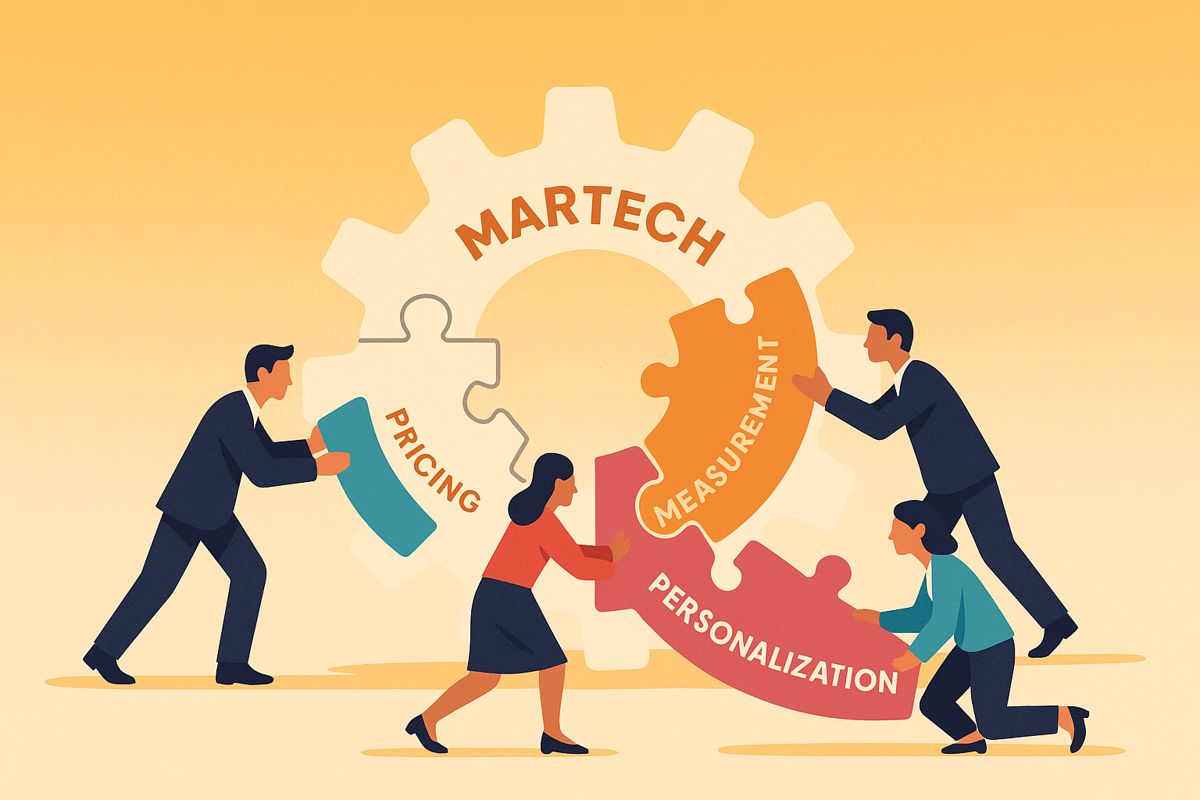
Salesforce's major AI release in December 2025 is set to fundamentally reshape 2026 marketing budgets, team structures, and technology stacks. While headline figures like a $15 billion AI campus and an anticipated $10.3 billion Q3 FY26 revenue runrate are significant, the underlying platform changes are forcing every brand on Customer 360 to urgently revise its strategic roadmap.
Salesforce AI Reshapes 2026 Marketing: Budgets, Teams, and Tech Stacks
Salesforce's major AI release in December 2025 is set to fundamentally reshape 2026 marketing budgets, team structures, and technology stacks. While headline figures like a $15 billion AI campus and an anticipated $10.3 billion Q3 FY26 revenue run-rate are significant, the underlying platform changes are forcing every brand on Customer 360 to urgently revise its strategic roadmap.
This shift demands increased investment in AI, a reorganization of roles, and the consolidation of up to one-third of existing marketing technologies. With access to smarter, faster personalization and automated measurement, brands must adapt quickly to maintain a competitive edge. As data and analytics roles gain prominence, obsolete technology is being shed in a widespread effort to keep pace.
How is Salesforce's December 2025 AI release reshaping 2026 marketing budgets and team structures?
Salesforce’s December 2025 AI release is compelling marketing organizations to overhaul their budgets, org charts, and tech stacks. Key drivers include new AI agent pricing, real-time personalization, automated measurement, updated data mandates, talent reskilling, and a projected 30% reduction in martech tools – all aimed at boosting productivity and accountability.
Salesforce's AI release is forcing marketing leaders to reallocate budgets toward new AI agent licensing and talent reskilling. The platform's native capabilities for personalization and measurement are also triggering a consolidation of martech stacks, with teams aiming for a 30% reduction in redundant tools.
-
Agentforce pricing levers
CRO Miguel Milano has confirmed that new AI agent bundles will be priced "3-10×" higher than legacy SaaS fees. They will be offered through three models: per-seat, per-conversation, or per-API call. Early adopters like AstraZeneca are signing nine-figure deals to lock in current rates, betting that AI agents will optimize team efficiency. Marketers who delay until 2026 will face quarterly price increases. -
Native personalization pipes
The December release integrates real-time inference directly into Marketing Cloud CDP. Instead of exporting static segments, the platform scores each contact against over 200 behavioral signals in milliseconds, triggering the next-best offer before an email even finishes rendering. Pilot programs with telecom and pharma clients saw improved click-to-open rates of 18-34% without any new creative development. -
Measurement co-pilot
A new "incrementality engine" automates the design of geo-based holdout tests, calibrates media mix models, and generates executive-ready reports. Early testers report that the tool reduced experiment setup time from six weeks to just four hours and lowered required sample sizes by 27% using adaptive Bayesian logic.
"The speed of innovation has exceeded the speed of customer adoption," CEO Marc Benioff admitted on the earnings call, warning that laggards will pay both margin and morale costs as boards demand AI productivity tables.
Data governance becomes a revenue center, not a cost line
The Informatica acquisition integrates data quality, lineage, and local-zone encryption across every Salesforce cloud. For marketers, this creates three immediate mandates for 2026 planning:
| Capability | Legacy Approach (2024) | AI-First Approach (2026) |
|---|---|---|
| Segment creation | SQL lists refreshed nightly | Streaming graph updated every 30 sec |
| Consent orchestration | Manual CSV upload to CMP | Agent checks consent before each send |
| Attribution depth | Last-click or MTA model | Causal triangulation (MMM + geo + platform) |
Shared accountability is a key development. Platforms now expose raw lift logs to auditors, and brands that can translate this data into board-ready narratives will secure larger 2027 budgets. This requires hiring or upskilling a "measurement translator" who is fluent in both SQL and strategic storytelling.
Talent: the 4-R playbook in action
Salesforce’s internal 4-R framework – redesign, reskill, redeploy, rebalance – is now directly influencing marketing job descriptions. Teams once organized around campaign sprints are being reconfigured into agent-centric portfolios:
- Agent owner – Manages five to seven digital agents, each responsible for a micro-funnel (e.g., prospect, nurture, win-back). Their primary KPI is incremental revenue per agent conversation.
- Integration diplomat – Liaises between sales, legal, and data teams to ensure agent logic complies with regional AI regulations.
- Model whisperer – Focuses on tuning prompts and reward functions, while creative teams supply the training data.
Continuous learning is no longer a corporate perk but an integrated part of daily workflows. A pilot at a Central-Asian pharma distributor provided 120 merchandisers with AI-driven route suggestions; revenue per outlet increased by 14% while call frequency fell by 9%, allowing reps to concentrate on high-margin products.
Martech stack compression begins now
Each December release includes a list of "retired connectors," and in 2025, this list is the longest in five years. Standalone predictive send-time optimizers, legacy DMPs, and point-solution chatbots are all being deprecated because Agentforce now provides these capabilities natively. CMOs locked into three-year SaaS contracts from 2023 face a sunk-cost dilemma: continue paying for a redundant tool or write it off and migrate to native agents.
Since November, regional systems integrators have seen a 40% increase in requests for "rationalization roadmaps," with most clients aiming for a 30% net reduction in tools by Q2 2026. The benefits include a lower integration tax, a single identity graph, and a unified SLA, but the process often involves navigating internal politics as product owners defend their turf.
What happens next
In January, executive boards will demand two key artifacts: an AI productivity ledger and a 2026 attribution model that proves the ROI of AI agents. Marketing teams that begin building these assets now – using the new measurement tools and agent pricing calculators – can lock in 2025 rates and enter 2026 with budget headroom. Those who wait risk falling behind in the gap between rapid innovation and slow adoption.