
Lilly, NVIDIA Invest $1B+ in AI Drug Discovery Lab
Alexander Shlimakov specializes in Salesforce, Tableau, Mulesoft, and Slack consulting for enterprise clients across the CIS region. With a proven track record in technical sales leadership and a results-oriented approach, he focuses on the financial services, high-tech, and pharma/CPG segments. Known for his out-of-the-box thinking and strong presentation skills, he brings extensive experience in solution sales and business development.
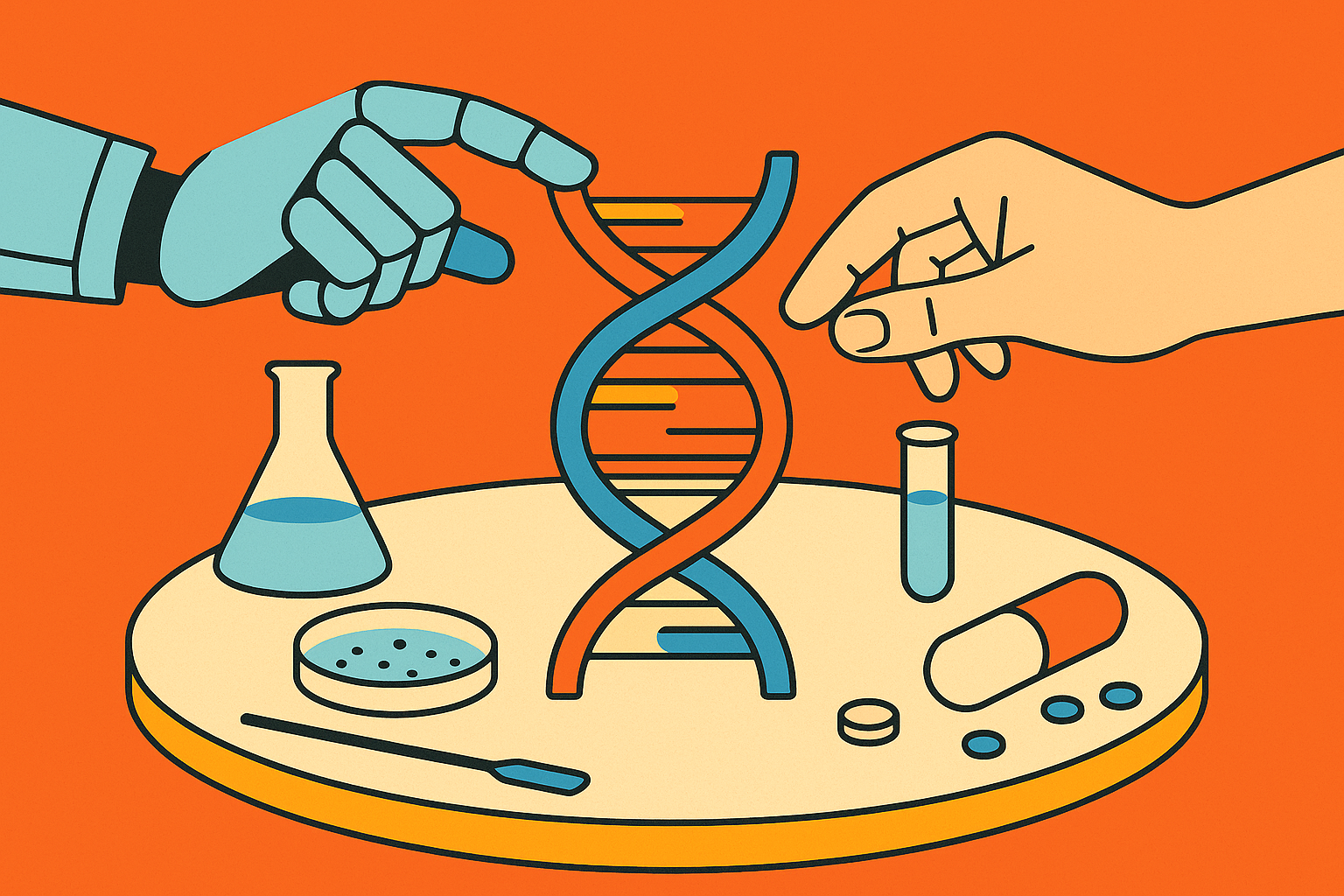
Lilly and NVIDIA launch a $1B AI lab in Silicon Valley to revolutionize drug discovery, aiming to cut timelines & costs significantly.
Lilly, NVIDIA Invest $1B+ in AI Drug Discovery Lab
Pharma giant Eli Lilly and tech leader NVIDIA are investing over $1 billion in a new AI drug discovery lab in Silicon Valley. This landmark collaboration aims to revolutionize how new medicines are developed by leveraging supercomputing, artificial intelligence, and advanced robotics. The goal is to significantly shorten discovery timelines, reduce costs, and bring novel treatments to patients faster than ever before.
What is the goal of the Eli Lilly and NVIDIA AI co-innovation lab?
The lab's primary goal is to create a new paradigm for drug discovery. By integrating NVIDIA's AI and computing platforms with Lilly's biological data and scientific expertise, the partnership seeks to build and validate AI models that can identify and design novel drug candidates with unprecedented speed and precision.
Announced on January 12, 2026, at the J.P. Morgan Healthcare Conference, the five-year pact commits more than one billion dollars to a co-innovation lab set to open by the end of March. This initiative is not about incremental improvements; its mission is to re-write the drug-discovery playbook from the ground up.
| What each side brings | Lilly | NVIDIA |
|---|---|---|
| Raw material | 2.7 million high-resolution assays, 1.2 PB of multi-omic data, 200+ disease-relevant cell lines | DGX Cloud clusters, BioNeMo, Omniverse, Jetson robotics stack |
| Talent | 400 discovery scientists, chemists, biologists | 250 AI engineers, foundation-model researchers |
| Infrastructure | Wet labs, robot arms, in-vivo suites | GPU SuperPODs, digital-twin simulators |
The lab's design, modeled on a tech incubator, physically integrates the teams. Kimberly Powell, NVIDIA's VP of Healthcare, describes the workflow as a "closed-loop discovery engine," where robotic experiments continuously feed data to AI models, which then generate new hypotheses for scientists to test daily.
"We are uniting massive compute, specialized talent and the ability to shape data at immense scale… moving toward a future where discovery is driven by rapid experimentation."
- Diogo Rau, Lilly EVP & Chief Information & Digital Officer
From predictive to causal biology
The project marks a shift from predictive AI, which asks "what molecule might work?", to causal biology, which asks "why would it work?". To achieve this, the teams will train multimodal foundation models on five integrated data types: gene expression profiles, CRISPR knockout maps, 3D protein structures, synthesis routes, and real-time microscopy. Early pilots on Lilly's existing supercomputer suggest these models can shorten preclinical timelines from five years to just 12-18 months and reduce costs by up to 40%.
Robotics as a data generator
NVIDIA's Isaac robotics platform is a key component, transforming the wet lab into a massive data-generation engine. Robotic arms will automate experiments, processing 10,000 micro-titer wells per hour and streaming annotated results directly to the AI. This creates a powerful reinforcement learning loop where experimental outcomes continuously refine the models. The system is projected to generate one terabyte of labeled data per week, vastly exceeding the output of conventional high-throughput screening facilities.
Regulatory sandbox
To ensure that accelerated discovery does not compromise safety, the lab includes a dedicated regulatory science unit. This team will work in alignment with the FDA's Emerging Technology Program, creating a regulatory sandbox to pre-validate AI-generated evidence. The goal is to build trust and familiarity with the new methods among regulators before a drug candidate reaches the official IND filing stage.
The wider chessboard
While the Lilly-NVIDIA deal is the largest of its kind, it reflects a broader industry trend. Other major investments include AstraZeneca and CSPC's $5.2 billion pledge in 2025 for AI in chronic disease and Illumina's Billion Cell Atlas, a massive dataset being used for foundation model training. According to analysts at ZS Associates, 93% of pharma executives plan to increase AI R&D budgets in 2025, with total sector spending expected to surpass $3 billion.
| Milestone | Traditional average | AI-accelerated target (2026) |
|---|---|---|
| Hit → Lead | 24 months | 8 months |
| Lead → PCC | 30 months | 12 months |
| PCC → IND | 18 months | 12 months |
| Overall cost | $250-400 million | $150-250 million |
Competitive ripples
This partnership signals a strategic shift for both industries. For Big Tech, it shows a move from simply providing cloud infrastructure to actively participating in drug discovery. For Eli Lilly, the alliance is a critical strategy to address the looming patent-cliff era, with six of its top drugs losing exclusivity by 2030. A successful AI platform could potentially double the number of annual IND-ready programs, securing the company's future pipeline without a proportional increase in traditional lab resources.
"A billion-dollar bet on AI in drug discovery… building a truly joint Lilly/NVIDIA team, co-located in a joint facility at the heart of Silicon Valley."
- Thomas Fuchs, Lilly's first Chief AI Officer
What happens next
The lab is currently being constructed in a 120,000-square-foot facility near Levi's Stadium, set to open in Q2. It will house 400 Lilly scientists and 250 NVIDIA engineers. The partnership's first major milestone is to advance three AI-designed drug candidates into IND-enabling studies by the end of 2027. Success would not only validate their approach but also create a new industry template, with plans to license the entire discovery playbook to other pharmaceutical companies using NVIDIA's platform.