
Kazakhstan: AI Spending Soars, Autonomous Agents Drive 24% Productivity
Alexander Shlimakov specializes in Salesforce, Tableau, Mulesoft, and Slack consulting for enterprise clients across the CIS region. With a proven track record in technical sales leadership and a results-oriented approach, he focuses on the financial services, high-tech, and pharma/CPG segments. Known for his out-of-the-box thinking and strong presentation skills, he brings extensive experience in solution sales and business development.
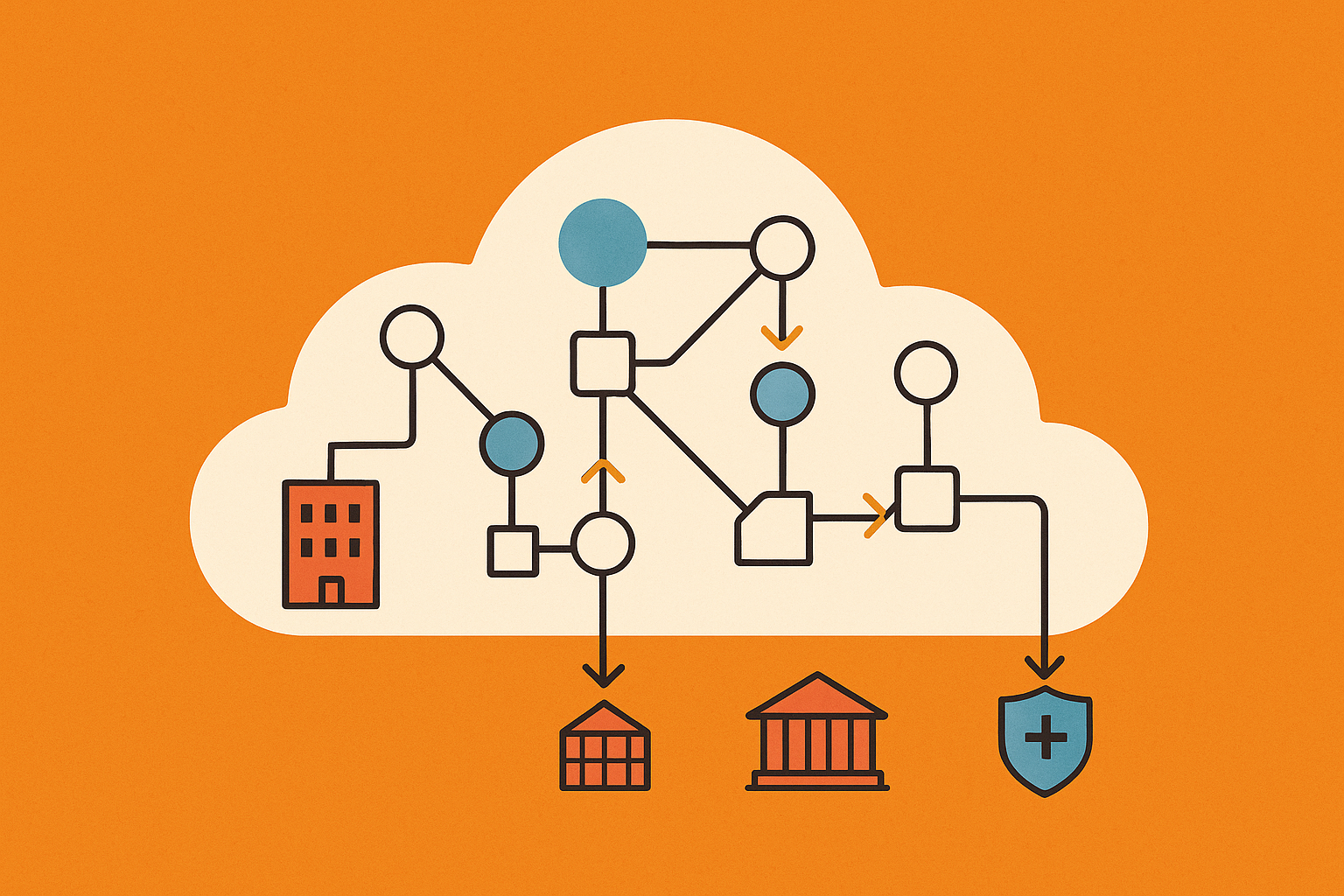
Generative AI spending to hit $900B by 2033. Kazakhstan embraces AI agents for economic growth, leveraging cloud & AIaaS.
In Kazakhstan, AI spending soars as autonomous agents drive 24% productivity gains, mirroring a global trend where enterprise demand is pushing generative AI spending from USD 121 billion in 2026 toward USD 900 billion by 2033. This transformation is powered by cloud-native agentic platforms, with 40% of new enterprise applications already embedding task-specific agents. As the share of projects using autonomous decision-making is set to double within six months, both private and public sectors in Kazakhstan are poised to leverage AI for dramatically smarter and more efficient operations.
How is generative AI and cloud adoption transforming enterprise operations in Kazakhstan?
Generative AI and cloud platforms are fundamentally reshaping enterprise operations in Kazakhstan. By deploying autonomous agents for functions like customer service, IT support, sales, and compliance, businesses are leveraging local data centers and AI-as-a-Service (AIaaS) models. This strategic shift enables accelerated decision-making, significant cost savings, and the delivery of highly scalable digital services across all major industries.
| Driver | 2026 Metric | Source |
|---|---|---|
| AI-as-a-Service market | $20 B → $91 B (35 % CAGR) | MarketsandMarkets |
| Cloud share of GenAI spend | 77 % | Coherent Market Insights |
| Enterprises with ≥1 agent in production | 23 % scaling today | Master of Code |
Kazakhstan's Year of Digitalization and Artificial Intelligence capitalizes on this global trend. The nation's ICT market is projected to hit $2.4 billion by 2031, growing 8.9% annually. This growth is supercharged by a 69% surge in cloud revenue in 2023, following the launch of regulated data centers by QazCloud and Yandex Cloud. Consequently, the advanced infrastructure required to deploy thousands of AI agents is now accessible and affordable for businesses in Almaty and Astana.
"Agentic bids already appear in 40 % of new tech-service RFPs; early adopters report 25-40 % total-cost-of-ownership cuts within two quarters."
- BCG survey of 2026 enterprise procurement plans
Where the Agents Are Landing First
Kazakhstani enterprises are primarily deploying autonomous agents in four key areas: customer support, to deflect routine inquiries; IT operations, for automated incident resolution; sales and revenue, to guide next-best actions; and finance, for streamlined reconciliation and fraud detection. These applications deliver immediate efficiency gains.
Global pilots reveal a repeatable landing pattern:
- Customer support - Deflecting up to 80% of tier-1 inquiries with agents that access knowledge bases, CRM, and ERP systems in real time.
- IT operations - Resolving over half of level-1 and level-2 incidents without human intervention by 2026, per Gartner predictions.
- Sales & revenue - Increasing B2B pipeline win-rates by 15-30% using predictive next-best-action agents.
- Finance & compliance - Reducing false positives in fraud screening by 40% with autonomous reconciliation, as demonstrated by banks like Macquarie.
This trend is already visible in Kazakhstan, where the country's largest telecom operator successfully implemented AI for customer support, reporting "revolutionary insights." Similarly, regional pharmaceutical and FMCG companies are replacing legacy CRMs with modern cloud platforms that include AI agents for sales coaching and compliance.
Why Cloud & AIaaS Remove the Traditional Barriers
While on-premise software still dominates 71% of enterprise deployments in Kazakhstan, cloud adoption is rapidly closing the gap with an 11% CAGR. AI-as-a-Service (AIaaS) models built on the cloud are effectively overcoming three traditional barriers to adoption: data sovereignty, high capital expenditure, and talent shortages.
- Data Sovereignty - Local data centers, including QazCloud's Akmola campus and the upcoming Azure region, ensure all data remains within Kazakhstan.
- Capital Investment - Pay-per-use APIs replace prohibitive multi-million dollar licensing fees. A reported 88% of regional firms confirm that OPEX models sped up budget approvals.
- Skills Gap - Low-code agent-building platforms empower business analysts to create complex AI workflows that previously demanded specialized machine learning expertise.
"Enterprises are leveraging cloud-based AI platforms to access pre-trained models, APIs, and AI tools without heavy infrastructure investment, reducing the total cost of ownership."
- MarketsandMarkets 2025-2030 AIaaS outlook
Astana's Blueprint: 50 AI Services by December
The government's Digital Qazaqstan action plan, approved in March 2026, accelerates this shift with ambitious targets. The plan mandates 50 AI-powered public services, a 30% workload migration to the QazTech cloud, and onboarding 80% of civil servants to a unified Gov Workspace. Significant funding is creating sector-specific datasets and a multi-agent platform called AlemGPT, designed to manage 35 core services from permit issuance to social benefits. This large-scale public sector adoption provides private enterprises with pre-built data integrations and compliance frameworks, drastically reducing their pilot-to-production timelines.
Enterprise Software Spend Mix Shifts to Outcomes
Large enterprises in Kazakhstan (over 1,000 employees) are leading this investment, allocating 12% of annual revenue to ICT - double the rate of SMEs - and accounting for 70% of the country's total ICT spending. Global counterparts that have already scaled autonomous agents report significant returns:
| KPI | Verified 2026 Uplift |
|---|---|
| Productivity | +24 % average |
| Cost base | - 16 % within 12 mo |
| Revenue growth | +29 % where agents touch sales |
Kazakhstani banks and retailers that have completed large-scale cloud and AI rollouts report comparable results, indicating that the technology adoption gap between emerging and mature markets is closing at an unprecedented rate.
What to Watch Next
- Interoperability Protocols - The adoption of standards like the Google-backed Agent2Agent protocol will enable Kazakh businesses to seamlessly integrate with global supply chains.
- Energy-Sector Agents - With 90% of Kazakhstan's geological data digitized, autonomous drilling rigs and predictive maintenance agents are transitioning from development to field deployment.
- Satellite-Cloud Hybrids - Extending connectivity via low-orbit satellites to remote industrial sites and transport routes will expand the reach of autonomous agents beyond fixed fiber networks, a crucial development for a country of Kazakhstan's size.
The key infrastructure - cloud capacity, flexible financing, and data-sovereign platforms - is now established. The primary challenge for the next wave of Kazakhstani companies is no longer technology access but rather the organizational readiness to empower autonomous systems to drive business outcomes.