
Kazakhstan: AI, 5G, & Robots Propel Logistics 4.0 in Central Asia
Alexander Shlimakov specializes in Salesforce, Tableau, Mulesoft, and Slack consulting for enterprise clients across the CIS region. With a proven track record in technical sales leadership and a results-oriented approach, he focuses on the financial services, high-tech, and pharma/CPG segments. Known for his out-of-the-box thinking and strong presentation skills, he brings extensive experience in solution sales and business development.
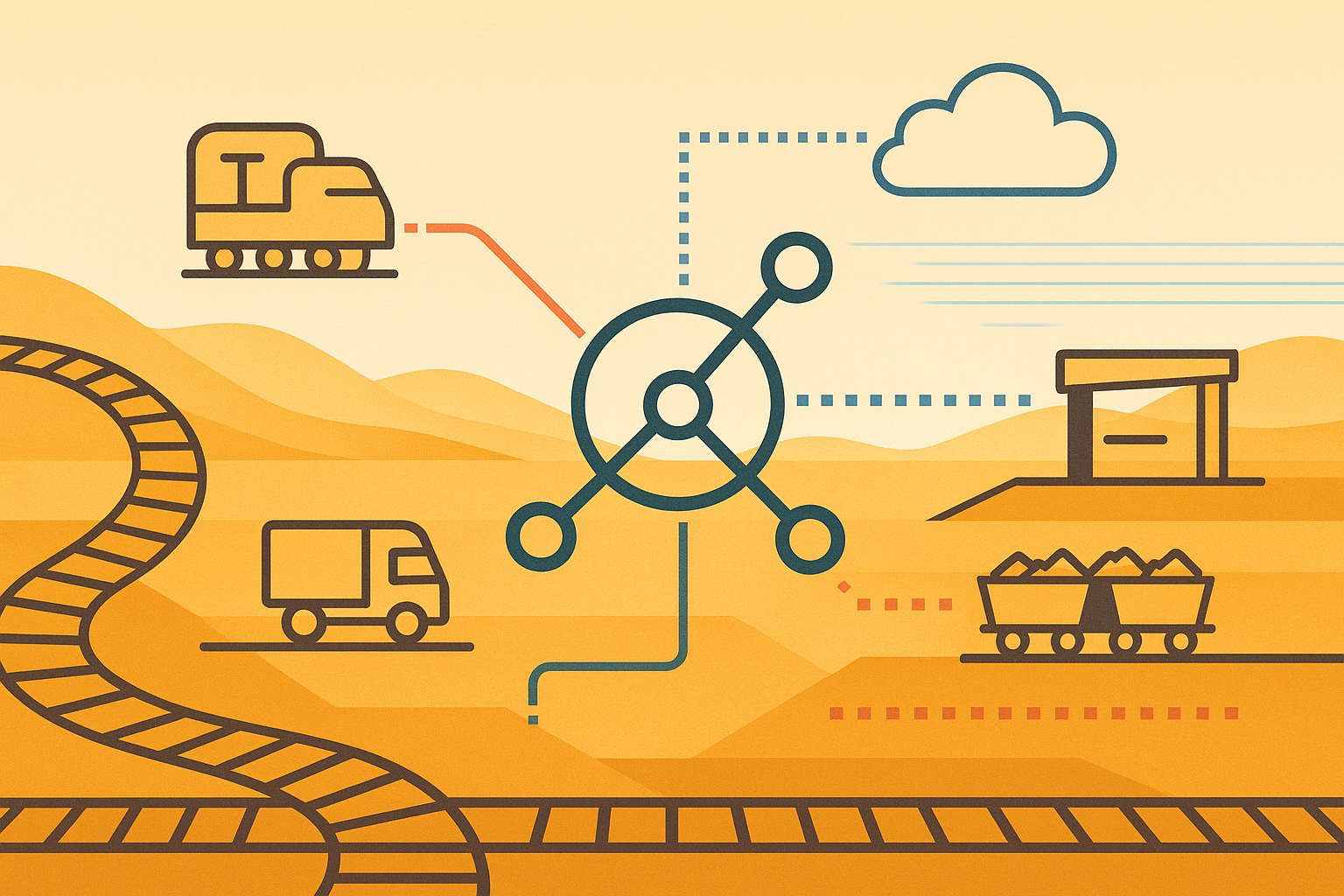
Kazakhstan is spearheading Logistics 4.0 in Central Asia, using AI, 5G, and automation to transform mining, rail, and customs.
Kazakhstan: AI, 5G, & Robots Propel Logistics 4.0 in Central Asia
Driven by Kazakhstan, the strategic deployment of AI, 5G, and robots is propelling Logistics 4.0 across Central Asia, transforming the nation's vast steppe into a smart hub for global trade. The country is leveraging artificial intelligence, autonomous systems, and cloud platforms to revolutionise mining, modernise railways, and accelerate customs clearance. These advancements are creating faster, more reliable supply lines and establishing Central Asia's supply chains as a stronger, more modern force in Eurasian logistics.
How is Central Asia implementing Logistics 4.0 technologies in mining and transport?
Central Asia is deploying Logistics 4.0 by integrating advanced technologies across key sectors. This includes AI-curated geological data and digital platforms for mining, industrial 5G networks with autonomous vehicles for transport, modernised digital railways, and unified cloud-based systems for faster customs clearance at borders.
Kazakhstan's Unified Subsoil Use Platform has processed 506 applications since its 2026 launch, with industry reports indicating significant revenue generation through online auctions - a level of speed and transparency unimaginable with Soviet-era paper systems. This portal now digitally tracks thousands of active licences, reducing weeks of manual compliance checks to mere minutes.
The geological data powering these auctions is curated by AI. According to industry reports, the National Geological Survey has applied machine-learning models to decades of drilling archives, flagging mineral anomalies that may have been missed by earlier geological assessments. The survey's coverage is expanding significantly, providing private explorers with sharable, cloud-based maps before exploration begins.
- Quote:
> "AI systems can analyse large volumes of information, identify patterns, predict possible problems and recommend solutions in real time... In some advanced logistics hubs around the world, AI-driven automation already controls warehouse robots, cargo sorting systems, autonomous vehicles and predictive scheduling systems."
(Source: News Central Asia)
This digital transformation extends to the mine sites themselves. Private industrial 5G networks now connect autonomous 240-tonne dump trucks to cloud-based dispatchers in the copper belt. Early deployments of predictive-maintenance sensors on haul trucks have shown promising results in reducing unplanned downtime. According to industry reports, digital twins and sensor analytics can significantly increase capacity utilisation, reduce maintenance budgets, and boost overall profitability.
Rail infrastructure is undergoing a parallel upgrade. President Tokayev has mandated extensive modernisation of track and construction of new lines, integrating digital signalling and satellite-based traffic management. The upgrade of the Dostyk-Moiynty corridor, a key trans-Eurasian bottleneck, will quintuple its throughput upon completion in 2027. This will boost the corridor's capacity to 10 million t/year by 2027. Container volumes have already increased five-fold over the last decade, signaling a strategic pivot from bulk commodities to higher-margin, time-sensitive cargo.
Lacking Kazakhstan's mineral wealth, Kyrgyzstan and Tajikistan are focusing on reducing friction at their borders. With funding from international development organizations and technical support from various agencies, the two nations are implementing several key systems:
| System | Function | Go-live | Supported by |
|---|---|---|---|
| UAIS | Unified Automated Information System for customs | 2025-2026 | ADB |
| ASYCUDAWorld | Electronic declarations & risk analysis | Oct 2025 (TJ) | UNCTAD / World Bank |
| Smart-Bazhy | Single-entry digital clearance portal | 2025 (KG) | TFAF grant |
Furthermore, according to industry reports, Tajikistan's government is incentivising modernisation by offering tax exemptions on AI-enabled X-ray scanners, digital scales, and smart cameras at customs posts. This policy signals that advanced hardware is considered essential public infrastructure.
- Quote:
> "Across the region, the concept of 'Logistics 4.0' is beginning to gain attention... Many remote areas still lack advanced digital infrastructure. Regional logistics systems are not yet fully integrated."
(Source: News Central Asia)
Private integrators are stepping in to close this integration gap. Salesforce-based platforms now create unified dashboards for Kazakh producers, syncing mine-planning software, rail waybills, and port terminal queues. Similar cloud solutions are being adapted for Kyrgyz customs brokers to pre-clear cargo like Tajik fruit trucks. Kazakh data-residency laws, which require personal and production data to remain within the republic, have spurred the growth of domestic server farms and encryption technologies without impeding these roll-outs.
Upstream in the energy sector, AI is optimising operations at oil and gas facilities in western Kazakhstan and Turkmenistan's Caspian blocks. Pattern-recognition algorithms adjust refinery throughput based on real-time rail-car availability, while computer-vision cameras verify the seal integrity on hydrocarbon wagons. This technology has helped transport significant volumes of freight along the corridor, with industry reports indicating substantial improvements in approval cycles for oil shipments and reductions in shadow fuel turnover.
Even Kyrgyzstan's pastoral valleys are adopting advanced automation. Pilot autonomous agentic systems are managing small dried-fruit processing units with high efficiency rates, demonstrating that AI-controlled production can thrive far from major IT hubs. If these micro-factories are located near new rail lines, Central Asia can diversify its exports beyond dry bulk to include time-sensitive agricultural products.
The region has progressed from isolated pilots to an increasingly cohesive digital ecosystem. AI interprets geology, 5G transmits data, automated vehicles move ore, and cloud portals clear customs. Every tonne of cargo that reaches China or Europe on a predictable schedule enhances the land corridor's competitiveness against sea routes, pulling Eurasian supply chains northward onto Central Asian steel.