
Zendesk Ends Chatbot Era, Unveils AI-Human 'Autonomous Service Workforce'
Alexander Shlimakov specializes in Salesforce, Tableau, Mulesoft, and Slack consulting for enterprise clients across the CIS region. With a proven track record in technical sales leadership and a results-oriented approach, he focuses on the financial services, high-tech, and pharma/CPG segments. Known for his out-of-the-box thinking and strong presentation skills, he brings extensive experience in solution sales and business development.
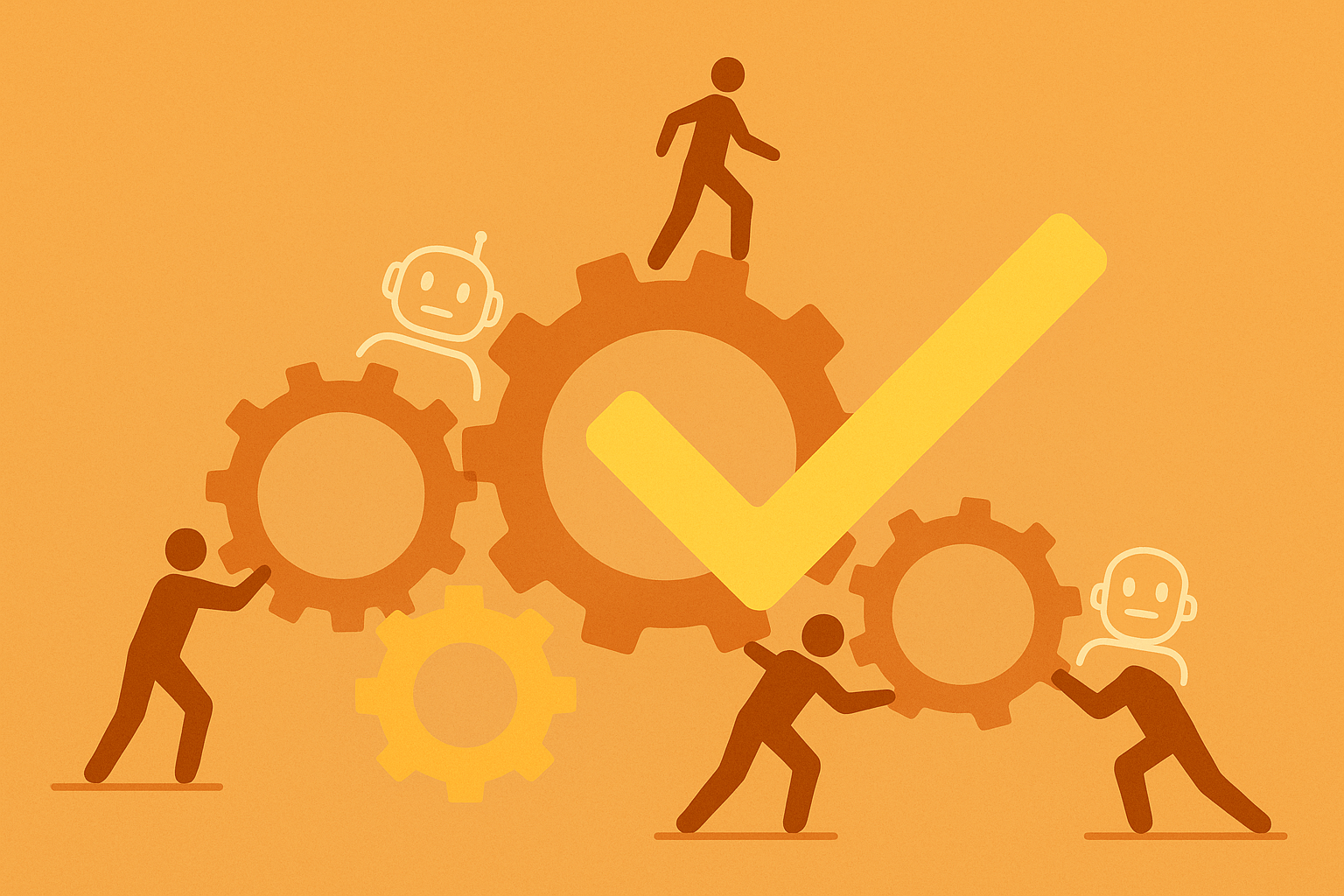
Zendesk unveils an Autonomous Service Workforce, blending AI agents & human experts for outcome-based customer service.
Zendesk Ends Chatbot Era, Unveils AI-Human 'Autonomous Service Workforce'
Zendesk is ending the chatbot era with its new Autonomous Service Workforce, a revolutionary AI-human model unveiled at its annual Relate conference. This system blends specialized AI agents with human experts under a new operating model where companies pay only when a customer issue is verifiably solved, aiming to boost efficiency and customer satisfaction.
Zendesk's new platform continuously learns from every interaction, automatically updating its knowledge base to ensure fast and accurate resolutions. By integrating AI and human agents across all support channels and implementing a rigorous quality-checking process, this model promises significant cost savings and superior performance.
What is Zendesk's new Autonomous Service Workforce and how does it change customer support?
Zendesk's Autonomous Service Workforce is an advanced support model combining specialized AI agents with human experts. It operates on a self-learning platform and uses an outcome-based pricing model, charging businesses only when a customer's issue is verifiably resolved, leading to more efficient and accurate service.
The architecture driving this strategy is the Zendesk Resolution Platform. This unified environment ingests vast amounts of data from extensive historical ticket interactions to train its models. A built-in Resolution Learning Loop analyzes the outcome of every conversation, updates the system's knowledge graph, and refines automation pathways without requiring manual code.
From deflection to resolution
Traditional support models bill for agent licenses or ticket volume, rewarding activity over effectiveness. Zendesk is shifting to a model that charges only for confirmed resolutions. Each outcome is double-checked: after an agent marks an interaction as solved, a second evaluation model audits the exchange to verify the resolution before it is billed. Spam, routine chats, and abandoned sessions are not charged.
| Old approach | Autonomous Service Workforce |
|---|---|
| Ticket deflection bots | End-to-end issue resolution |
| Pay-per-agent or pay-per-volume | Pay only for verified outcomes |
| Disconnected add-ons | Unified Resolution Platform |
| Static knowledge bases | Self-updating knowledge graph |
Multi-channel agents and human copilots
AI agents are already deployed across messaging, email, and voice channels with a shared context for seamless interaction. Future releases will include a no-code Agent Builder, enabling non-technical staff to develop and launch new AI skills. Four copilot modules ensure humans remain integral to the process:
- Agent Copilot drafts replies, integrates data from back-office systems via API, and can autonomously resolve a significant portion of tickets.
- Admin Copilot identifies system bottlenecks and suggests one-click workflow optimizations.
- Knowledge Copilot flags outdated knowledge base articles and recommends new content based on live customer conversations.
- Analyst Copilot uncovers root-cause trends using natural-language queries.
"The era of the chatbot - the era of frustration and deflection - is over. We are entering the age of the Autonomous Service Workforce."
Tom Eggemeier, CEO, Zendesk
Quality measurement baked in
A new Quality Score metric runs continuously across support interactions, evaluating both human and AI responses for tone, accuracy, and policy adherence. These scores are fed directly into the learning loop, allowing the platform to automatically tighten its resolution standards or escalate complex issues to human experts.
Outcome-based pricing in the market
Zendesk is joining a growing trend. Competitors like Intercom, Decagon, and other startups already bill exclusively for successful resolutions. Industry reports indicate that a significant portion of buyers prefer consumption-based models, while a growing number favor pure outcome pricing. With AI capable of closing tickets at substantially lower costs compared to human agents, the financial appeal is clear - provided the definition of "resolved" is contractually defined.
| Metric | Human agent | AI resolved outcome |
|---|---|---|
| Average cost per contact | Higher cost | Significantly lower cost |
| Efficiency comparison | Traditional rates | Improved efficiency |
| Buyer preference trend | - | Growing preference for outcome-based models |
Practical adoption hints
Industry case studies indicate that outcome-based pricing is most effective when three conditions are met:
- A high volume of repeatable, rules-based questions.
- A Single source of truth for all product, policy, and customer data.
- A Closed feedback loop that automatically captures CSAT scores or resolution confirmations.
Integrators note that merging CRM, ERP, and telephony data into a unified graph is the most challenging step but also the greatest predictor of achieving a high autonomous resolution rate.
Looking forward
Zendesk plans to open its Resolution Platform APIs to external large-language models like ChatGPT and Gemini. This will allow enterprises to use their preferred AI engines while leveraging Zendesk's quality scoring and outcome-based billing. The company foresees a future where every business manages a blended workforce of human and AI agents, all measured by the same KPIs: speed, accuracy, and customer delight.