
Salesforce, Google Cloud Deepen AI Partnership for CRM Productivity
Alexander Shlimakov specializes in Salesforce, Tableau, Mulesoft, and Slack consulting for enterprise clients across the CIS region. With a proven track record in technical sales leadership and a results-oriented approach, he focuses on the financial services, high-tech, and pharma/CPG segments. Known for his out-of-the-box thinking and strong presentation skills, he brings extensive experience in solution sales and business development.
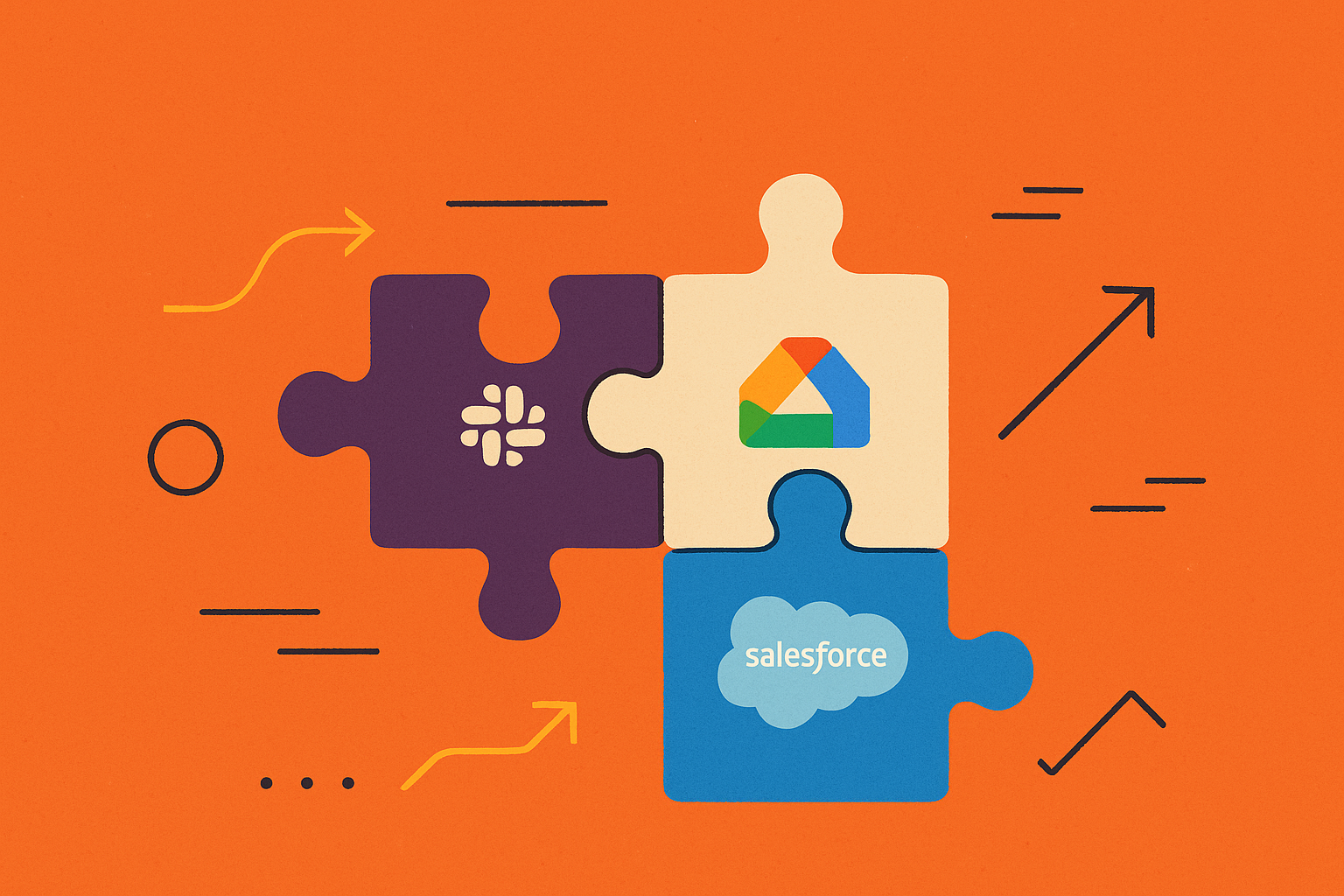
Salesforce & Google Cloud partner to integrate Agentforce, Gemini Enterprise, Slack, & Workspace, boosting CRM productivity.
At Google Cloud Next '26, Salesforce, Google Cloud deepen AI partnership for CRM productivity, uniting Agentforce, Gemini Enterprise, Slack, and Google Workspace into a single collaborative canvas. This integration allows employees to delegate tasks to AI agents directly within their existing conversations, eliminating the need to export data or switch between applications. By centralizing workflows, this alliance significantly saves time, accelerates teamwork, and enhances data security. Early adopters report that tasks once taking days are now completed in hours, freeing teams to focus on high-impact strategic work.
What is the new Salesforce and Google Cloud partnership, and how does it boost CRM productivity?
The expanded Salesforce and Google Cloud partnership unifies Agentforce, Gemini Enterprise, Slack, and Google Workspace, creating a seamless environment for collaboration and AI-driven workflows. This integration eliminates context-switching, enables zero-copy data sharing with BigQuery, and embeds governance to enhance CRM productivity.
Why the integration matters
This partnership integrates Salesforce and Google Cloud tools to eliminate context switching and streamline workflows. By enabling zero-copy data sharing and AI-driven actions within platforms like Slack and Google Workspace, it allows sales and marketing teams to work more efficiently and make faster, data-informed decisions.
Traditional B2B workflows suffer from significant inefficiencies due to employees switching between applications throughout the day. This new architecture targets that inefficiency at three key points:
- Context - AI agents inherit the full conversation history from Slack and Google Workspace.
- Data - Zero-copy integration allows Salesforce Data Cloud objects to be queried directly in BigQuery without replication.
- Action - With Gemini's reasoning and Agentforce skills, agents can approve discounts, draft emails, or generate Tableau dashboards from a single natural-language command.
Anatomy of the Agentic Enterprise
1. Cross-tool agents
Sales agents in Gemini Enterprise can analyze a pricing objection from a Slack thread, query historical win rates in BigQuery, and update the quote in Salesforce - all from the same chat window. Marketers can direct an agent in Google Slides to fetch campaign ROI, update an embedded chart, and add personalized notes for each prospect.
2. Zero-copy data mesh
Replacing slow ETL jobs, Salesforce Data Cloud exposes governed objects as BigQuery datasets via Google Analytics Hub. Queries run directly on the source data, with only the results being transferred. In Q3 FY2026, Salesforce processed 15 trillion records through zero-copy channels, providing a live, cost-effective foundation for enterprise AI.
| Legacy pipeline | Zero-copy equivalent | Business impact |
|---|---|---|
| 6-hour batch copy to warehouse | Metadata-only link | Insights in minutes |
| Duplicated storage fees | Single source of truth | Significant infrastructure savings* |
| Static dashboards | Live BigQuery materialized views | Same-day course correction |
- Internal benchmarks shared during Google Cloud Next '26 partner track.
3. Embedded governance
Access policies defined once in Data Cloud automatically propagate to BigQuery and Vertex AI. This ensures AI agents cannot expose sensitive PII or pricing data to unauthorized users and satisfies data residency regulations in markets like Kazakhstan.
Roll-out cadence and readiness
According to available information, some connectors and capabilities achieved GA status in early 2026, with additional features becoming available in stages throughout the year. Teams with Salesforce and Google Workspace can activate the Slack-first experience via a managed package. BigQuery admins can subscribe to Data Cloud shares through Analytics Hub. While no code changes are needed, architects should:
- Map critical CRM objects to BigQuery early to ensure agents train on complete data.
- Review Slack channel permissions, as agents inherit access from the channels they join.
- Budget for increased BigQuery compute, as iterative AI queries may raise scan volume even as storage costs decrease.
Early field signals
Telecom operator Tele2 Kazakhstan, speaking at Salesforce & Tableau Day Almaty, revealed that using Tableau CRM with zero-copy links reduced its monthly churn-analysis cycle from five days to just four hours. Although the company has not yet deployed Agentforce, this harmonized data layer alone eliminated four replication jobs and freed two full-time employees for higher-value analytics.
Practical next steps for 2025-26 roadmaps
- Pilot one cross-platform workflow, such as approving high-risk opportunities in Slack, to validate governance and performance.
- Adopt a "data product" mindset by exposing curated Data Cloud objects so that Gemini and Agentforce receive clean, labeled inputs.
- Track toggling time before and after rollout. Industry reports suggest significant productivity improvements for roles that rely on both CRM and documents.
"Discover how Agentforce 360 and Google Cloud enable agents to bridge operational silos and deliver seamless customer experiences across sales, service, and IT."
Next '26 breakout abstract
The partnership solidifies Google's position as the AI layer for the enterprise while Salesforce retains ownership of workflow logic. This clear division of labor ensures that investments in Agentforce skills and BigQuery models compound rather than compete. It paves the way for more seamless AI assistance working within the tools organizations already use.