
Kazakhstan, Uzbekistan: Digital Transformation Drives 2026 Goals
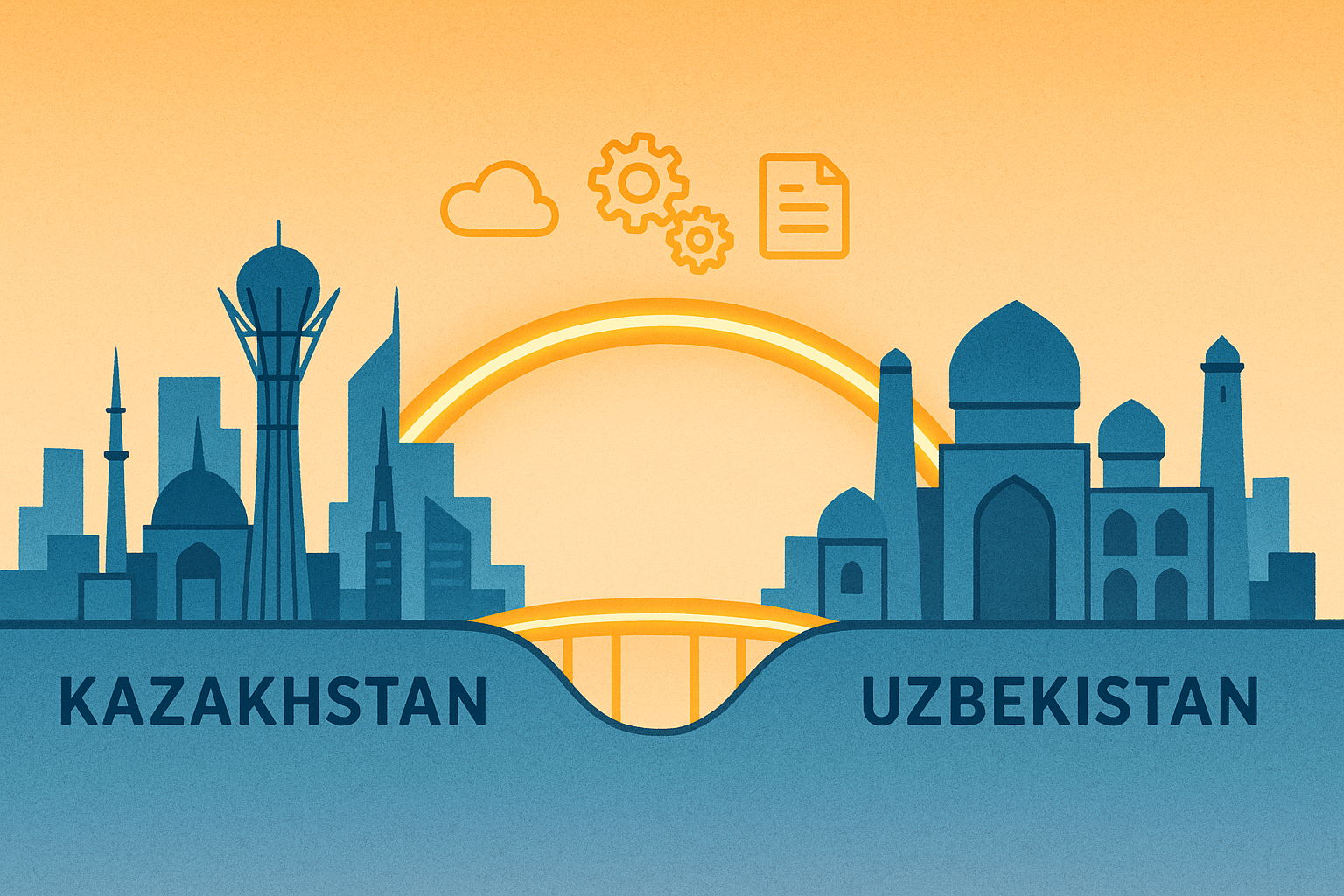
Kazakhstan & Uzbekistan sprint to digital. AI in 72 sectors, e-services, 5G, and cross-border tech reshape Central Asian economies.
In Kazakhstan and Uzbekistan, digital transformation drives ambitious 2026 goals, turning strategic investments in AI and connectivity into measurable economic growth. This report details each nation's strategy, key 2026 targets, and the joint projects accelerating regional integration. While Kazakhstan focuses on wide-scale AI adoption and 5G, Uzbekistan prioritizes a universal fiber backbone and accessible e-government services. Their collaboration is creating a seamless digital market, enhancing trade and unlocking new opportunities for businesses and citizens alike.
How are Kazakhstan and Uzbekistan advancing digital transformation between 2024 and 2026?
Kazakhstan and Uzbekistan are spearheading ambitious digital transformation initiatives through strategic investments in AI, 5G, and e-government. Kazakhstan is targeting over 90% online public services and AI integration across 72 sectors by 2026. Concurrently, Uzbekistan plans to achieve 70% e-government adoption and deploy 66,000 km of new fiber optic lines, collectively fostering a smarter, more efficient regional economy.
2024-2026 Strategy Snapshots
| Country | Master Plan | Core Tech Focus | Measurable 2026 Milestones |
|---|---|---|---|
| Kazakhstan | Digital Qazaqstan (AI-centred, multi-sector) | AI, 5G/6G, cloud, blockchain | 72 sectors under 20 AI roadmaps; 90 %+ public services online |
| Uzbekistan | Digital Uzbekistan 2030 (with 2025-26 sprint) | e-government, fiber, AI services | 70 % e-government coverage; 66,000 km fiber; 100+ new e-services |
Source: Kazakhstan's Prime Minister and Uzbekistan's presidential review.
Kazakhstan is implementing its Digital Qazaqstan plan, focusing on AI and 5G to digitize public services and key industries. Uzbekistan's Digital Uzbekistan 2030 strategy prioritizes expanding fiber infrastructure and e-government services, with both nations collaborating on shared digital platforms to enhance regional integration and economic performance.
Kazakhstan: AI Everywhere, 5G Underway
Kazakhstan's government finalized 20 sectoral AI roadmaps in April 2025. Each strategy mandates an AI pilot project integrated with the national analytics platform and a key performance indicator (KPI) due by Q4 2027. Early results demonstrate significant economic impact:
- Mining: AI-powered predictive maintenance on 30% of large draglines has reduced unplanned downtime by 17%, generating an estimated USD 220 million in annual output.
- Agribusiness: The deployment of machine-vision drones across 2.1 million hectares has cut herbicide use by 11% while increasing average crop yields by 4%.
In telecommunications, the Trans-Caspian Fiber Optic Cable became fully operational in March 2025. Following the issuance of 5G licenses in May, deployment is underway in major urban centers and the Western oil corridor, with the state operator targeting 40% population coverage by the end of 2026.
"92 % of public services are now accessible online, and version 3 of e-government will be fully AI-augmented."
- Astana Times, December 2024
Uzbekistan: Fiber and Front-Line Services
Uzbekistan's strategy for 2025-2026 emphasizes service delivery. After achieving universal broadband access to all settlements by late 2024, the government is now focused on deploying advanced digital services over this new fiber infrastructure.
Key operational targets for the upcoming 18 months include:
- Installing 2,284 new 4G/5G base stations
- Launching 100 new AI-powered e-services, such as automated pension payments and agricultural insurance alerts
- Completing 41 distinct "Digital Government" projects with firm launch deadlines
The national AI Strategy to 2030, unveiled in October 2024, aims for USD 1.5 billion in AI-based software exports. An early success is a Tashkent-based startup that secured USD 14 million in funding by leveraging government open data to provide real-time traffic analytics for regional logistics companies.
"Digitalisation is imperative for efficiency, transparency, citizen participation and competitiveness."
- EU-Central Asia Economic Forum Joint Statement, 2024
Cross-Border Spill-Over Effects
Shared digital infrastructure is creating powerful cross-border synergies, enhancing regional integration more rapidly than physical infrastructure.
- Interoperable Customs Data: Pilot programs for shared customs data exchange, launched in 2024, have reduced cargo processing times at the Kazakh-Uzbek border from 14 hours to just 5.
- Regional AI Sandbox: Universities in Almaty, Tashkent, and Bishkek are collaboratively using Kazakhstan's new supercomputer for climate modeling, reducing individual national compute costs by approximately 30%.
- Standardized APIs: Both nations have adopted common API standards for digital invoicing, allowing small and medium-sized enterprises (SMEs) to conduct seamless cross-border transactions without extra integration costs.
A June 2025 working paper from ESCAP introduced the concept of "Central Asia-as-a-Platform," highlighting that shared digital infrastructure offers greater capital efficiency than developing five independent national systems.
What Businesses Are Seeing on the Ground
Multinational corporations are increasingly using Kazakhstan and Uzbekistan as strategic testbeds for broader Central Asian market entry:
| Sector | Initial Success | Regional Expansion Plan |
|---|---|---|
| Telco | Tele2 Kazakhstan cut churn 12% via AI-driven retention campaigns | Same model being cloned for Tele2 Uzbekistan launch 2026 |
| FMCG | L'Oréal piloted AI merchandising in Tashkent, raising shelf compliance by 21% | Expansion to 4,000 Kazakh retail outlets in Q3 2025 |
| Banking | Digital mortgage origination in Kazakhstan reduced approval time from 7 days to 30 minutes | Uzbek micro-finance institutions preparing joint pilot |
These initiatives are supported by two critical enablers: newly completed high-speed fiber routes and a shared talent pool of analysts trained on platforms like Salesforce. Specialists frequently travel between Almaty and Tashkent to ensure consistent skill sets and project execution across both markets.
Technology Scoreboard (2025 Status)
| Technology | Kazakhstan Readiness | Uzbekistan Readiness |
|---|---|---|
| Public e-services | 92% online | 60% online (target 70%) |
| AI compute capacity | 1 supercomputer, multi-cloud | 10 AI labs under construction |
| 5G rollout | Licensed, 18% coverage | 112 pilot sites, 2026 target |
| Cross-border data APIs | Live for customs, e-invoices | Live for customs, expanding |
Sources: EBRD Transition Report 2025 and Central Asia Internet Governance Forum 2024 report.
Looking Ahead
While Kazakhstan pursues a broad-based strategy of integrating AI across 72 sectors, Uzbekistan is focusing on achieving rapid, tangible improvements in public service delivery. These complementary approaches create a powerful regional feedback loop: enhanced fiber connectivity accelerates AI development, shared AI models reduce the cost of new e-services, and improved services stimulate cross-border trade. This virtuous cycle is already in motion, with its full scaling potential expected to be clear by 2026.