
Kazakhstan, Uzbekistan: Fintech Hubs Eyeing $250B Digital Payments
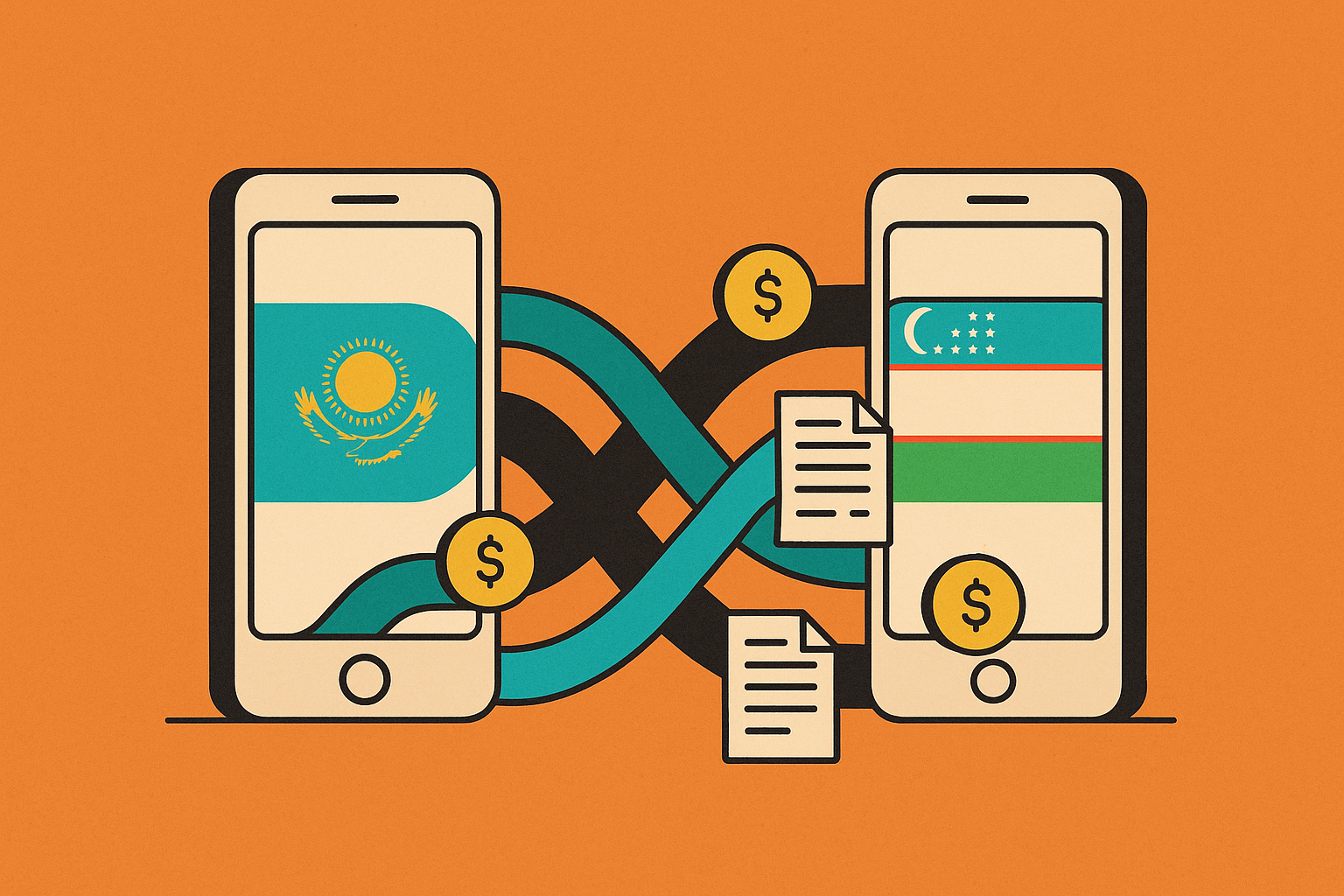
Kazakhstan & Uzbekistan redefine fintech, leveraging mobile money & digital infra. They attract $320M VC, with new laws & CBDCs.
Kazakhstan, Uzbekistan: Fintech Hubs Eyeing Digital Payments Growth
As emerging fintech hubs, Kazakhstan and Uzbekistan are eyeing significant growth in the digital payments market by pioneering a mobile-first financial corridor in Central Asia. They are leap-frogging legacy systems by channeling a substantial portion of retail payments through home-grown super-apps. This rapid modernization has attracted significant regional VC funding, drawing in capital from Gulf family offices and World Bank affiliates. By establishing robust digital regulations and secure, sovereign data infrastructure, the two nations are accelerating financial inclusion and cementing the region's role as a leader in modern fintech.
How are Kazakhstan and Uzbekistan transforming the fintech landscape in Central Asia?
Kazakhstan and Uzbekistan are spearheading Central Asia's fintech revolution by leveraging mobile super-apps for a growing share of retail payments, securing substantial venture capital, and launching digital currency initiatives. Their implementation of AI-driven, sovereign-grade digital infrastructure, supported by clear regulations, is fostering unprecedented innovation and attracting global investment.
Two countries, two blueprints
These nations are building a new financial corridor by prioritizing mobile-first solutions for their large under-banked populations. Through government-led initiatives, regulatory sandboxes for digital currencies and AI, and strong data localization laws, they are creating a secure and innovative environment for both users and investors.
| Priority | Uzbekistan | Kazakhstan |
|---|---|---|
| North-Star goal | Become regional fintech hub by 2030, attract significant FDI | Modernise banking law, scale AIFC digital-asset cluster |
| Key regulatory date | Regulatory sandbox development ongoing | Digital tenge pilot programs in development |
| State venture arm | Central Bank venture initiatives | National Fund + "fund-of-funds" targeting tech |
| Mobile penetration | Growing number of active wallets | High mobile subscription rates; Kaspi.kz widely adopted |
| Sandbox focus | Stablecoins, tokenised securities, open banking | CBDC, AI algorithms, cyber-resilience |
Uzbekistan's reform initiatives focus on modernizing financial regulations, developing open-banking APIs, and creating incentives for fintech pilots. Regulatory sandboxes are being developed to allow firms to test blockchain payments under international AML standards, while the Central Bank explores digital currency initiatives alongside commercial innovations.
Mobile-first demographics turbo-charge adoption
With low household desktop ownership and widespread smartphone access in cities, the region has cultivated a "mobile-only" user base. This reality has driven fintech firms to consolidate payments, e-commerce, and lending into single super-apps. In Kazakhstan, Kaspi.kz processes a significant portion of digital payments. In Uzbekistan, local platforms Payme and Click command substantial market share in retail transactions.
"Mobile wallets did not just improve checkout speed - many small businesses saw measurable repeat-purchase growth after accepting QR payments."
- Industry survey data, 2025
Since a significant portion of the adult population remains under-banked, fintech companies are successfully positioning smartphones as the primary banking channel. This strategy is proving effective, with forecasts projecting Central Asia's digital-payments economy to reach substantial growth by 2026.
Institutional capital discovers value in regulatory clarity
This clear regulatory environment is attracting sophisticated capital at an unprecedented rate:
- Dubai family offices, leveraging the UAE's strong position in MENA fintech funding, are securing early-stage stakes in Kazakh and Uzbek platforms.
- Gulf-based growth funds are leading significant investment rounds in regional platforms, representing some of the largest early-stage investments recorded in Central Asia.
- Development-finance institutions like the EBRD are providing debt facilities to Uzbek micro-lenders, while the IFC is taking direct equity in SME-lending fintechs integrated with national cloud systems.
The region's competitive valuation levels and a strategic shift toward profitable unit economics make late-stage investments increasingly compelling. While Kaspi.kz is a privately held Kazakh company that serves as an important market indicator, pre-IPO Uzbek platforms offer attractive investment opportunities as regional equity markets continue developing.
Sovereign cloud and AI sandboxes keep data at home
Both nations enforce strict data localisation, creating a defensive moat for domestic fintechs. Uzbekistan's Central Bank is developing a national cloud featuring embedded AI assistants, biometric Face IDs, and advanced anti-fraud analytics. Kazakhstan's National Bank has established a sovereign AI sandbox, allowing firms to train algorithms on local servers without exporting raw data - a major draw for data-rich sectors like insurance and robo-advisory.
"Technological neutrality is the guiding principle - the same cybersecurity and consumer-protection rules apply whether the decision is made by a human loan officer or an AI model."
- Kazakhstan National Bank policy guidance, 2025
Market outlook in numbers
- Growing number of active digital-wallet users in Uzbekistan
- Approximately 7.6 million active consumers on Kaspi.kz (Jan - Jun 2024), growing 15% in H1 2024
- Significant increase in fintech companies targeted in Uzbekistan by 2030
- Substantial foreign investment targets in Uzbek development plans
- Major Central Bank venture initiatives for early-stage Uzbek start-ups
- Record Central Asian VC activity in 2025, showing strong organic growth
The convergence of mobile ubiquity, rewritten laws, and sovereign digital rails is transforming the Kazakhstan-Uzbekistan corridor into a powerful, self-reinforcing fintech ecosystem. As both countries transition from sandbox experiments to broader implementation, the region is positioned to share its unique model of reg-tech + mobile money with other emerging markets.