
Salesforce, Pearson Partner for AI Upskilling; Kanopy Secures Agents

Alexander Bazilevich is a CRM expert and Top Salesforce Partner with over 17 years of sales experience in the IT industry. He specializes in transforming corporate goals into profits through cross-functional collaboration and innovative business solutions, with deep expertise in business systems and IT products.
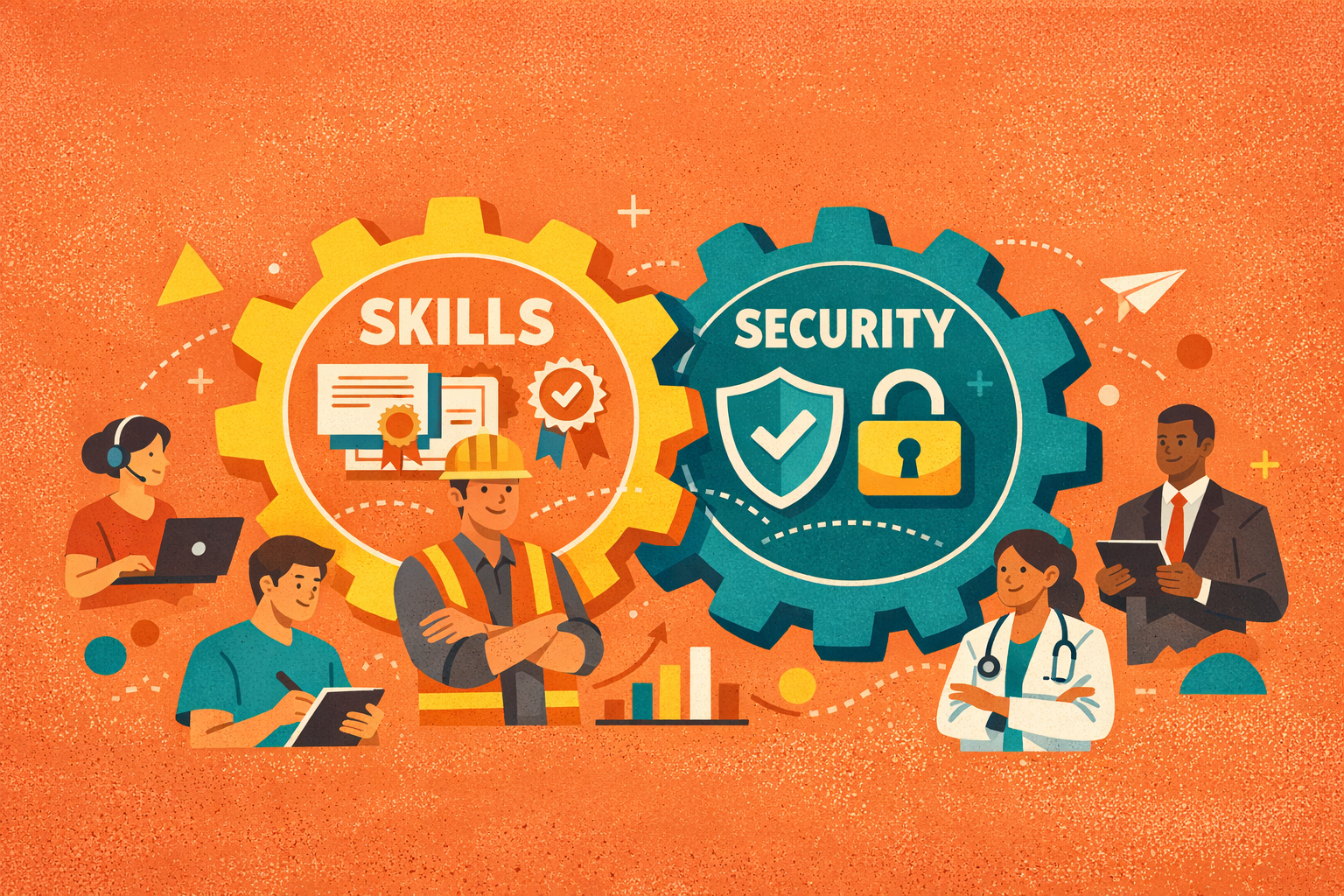
Salesforce partners with Pearson to boost AI readiness & Kanopy to secure AI agents. Prepare for 2026 AI integration now.
On 12 May 2026, Pearson and Salesforce announced an expanded partnership focused on AI readiness and workforce skills development. The Kanopy Security item is separate and not part of the Pearson press release, heralding a major industry shift. The expanded, multi-year strategic partnership, detailed in announcements from Pearson and PR Newswire, aims to accelerate AI readiness across Salesforce's global workforce.
This initiative focuses on identifying AI-driven job roles with Pearson's predictive analytics, upskilling employees with targeted training, and issuing verifiable digital badges. Concurrently, separate industry developments in AI governance are emerging to address security concerns around AI agents, though no original source confirms specific Kanopy Security integration or governance functions within the Salesforce ecosystem.
What is the new Salesforce and Pearson partnership about in 2026?
The expanded Salesforce and Pearson partnership uses predictive analytics to identify emerging AI-related job roles. It aims to upskill Salesforce's workforce through targeted training and Credly credentials, embedding AI learning and industry-recognized certification badges directly into employees' daily workflows to accelerate AI readiness at scale.
Building on a 15-year history where Pearson served as the sole global exam provider for Salesforce certifications, this new chapter layers AI-driven talent development onto their established foundation.
| Objective | Pearson Tools | Expected Impact |
|---|---|---|
| Anticipate new role requirements | Faethm predictive analytics | Map emerging AI-driven jobs 6 - 12 months ahead |
| Build capability at scale | Credly credentials + targeted assessments | Deep-skill across Salesforce certifications |
| Validate mastery | Global testing infrastructure | Issue industry-recognized badges in real time |
"AI is reshaping how we work faster than most organizations can reskill their people, creating a growing gap that impacts productivity and performance."
Vishaal Gupta, President of Enterprise Learning and Skills, Pearson
Pearson's Faethm engine will analyze Salesforce's roles to flag those at high risk of automation and prescribe targeted learning paths. Credly will then issue blockchain-verified badges that recruiters can instantly validate. The program's goal is to "embed learning directly into the flow of work," as noted in Pearson's release.
Kanopy Security joins the fray
On the same day, Kanopy Security announced a preventative integration designed to protect AI agents and automations created by business users inside Salesforce. The platform integrates with Salesforce's new "Headless 360" architecture - an API-first layer where agents operate without traditional user interfaces. Kanopy inspects every Flow, low-code logic block, and permission set before activation.
According to Kanopy's release, the service will:
- Map the Salesforce attack surface for customer tenants
- Detect over-privileged automations and data-leak patterns
- Auto-suggest secure configurations to citizen developers
For Salesforce clients in regions like Central Asia, where data sovereignty regulations are strict, this level of visibility is critical. For example, a single misconfigured Flow in Kazakhstan granting "View All" on contacts could expose significant consumer records, violating local data protection laws.
Salesforce's wider 2026 playbook
Industry reports suggest these initiatives align with Salesforce's broader strategy to build an "agentic enterprise." According to industry analysis, roadmaps for 2026 are built on key pillars:
| Pillar | 2026 Intent | Related Products |
|---|---|---|
| Agentforce 360 | Turn AI pilots into production workflows | Agentforce, Slackbot |
| Data Cloud | Unify CRM, Service Cloud and external data for agents | Data Cloud, Tableau |
| Headless 360 | Replace UI clicks with API agents | MuleSoft, APIs |
| Trust Layer | Embed governance in every agent | Shield |
According to industry reports, Agentforce pilots are showing significant autonomous resolution of service cases. Salesforce aims to increase this substantially and redeploy agents to drive new revenue.
Field experience suggests that enterprises combining upskilling with preventative governance can significantly reduce deployment cycles and audit findings.
Practical take-aways for 2026 adopters
Organizations can begin preparing now:
-
Inventory existing Flows and integrations
Tag each automation by data sensitivity and business criticality. Industry reports suggest that many Flows contain hard-coded admin credentials. -
Pilot Credly badges inside L&D programs
Issue micro-credentials tied to Trailhead modules. Completion rates improve significantly when badges are linked to promotion criteria. -
Model Faethm scenarios on your own organization
Export your role catalog, merge it with public automation data, and run a six-month risk forecast. This method has helped banks retrain significant numbers of loan officers before AI agent deployment. -
Pre-configure security policies
Establish security baselines with governance policies before deploying new agents to ensure built-in governance from the start.
By the numbers
According to industry reports and available data:
- Significant number of Salesforce employees targeted by Pearson upskilling
- Many active Salesforce certifications already managed by Pearson
- Growing number of Salesforce tenants exploring AI governance solutions
- Substantial portion of service cases showing autonomous resolution potential via Agentforce pilots
- Reduced timeframes for go-live when combining skills and governance approaches
These trends continue to evolve as organizations advance their AI adoption strategies. For now, the announcements signal a clear strategic direction: in 2026, AI skills and security are shifting from high-level strategy to fundamental daily operations.