
Kazakhstan: Digital Farm Platform Boosts Yields, Saves Water (9%)
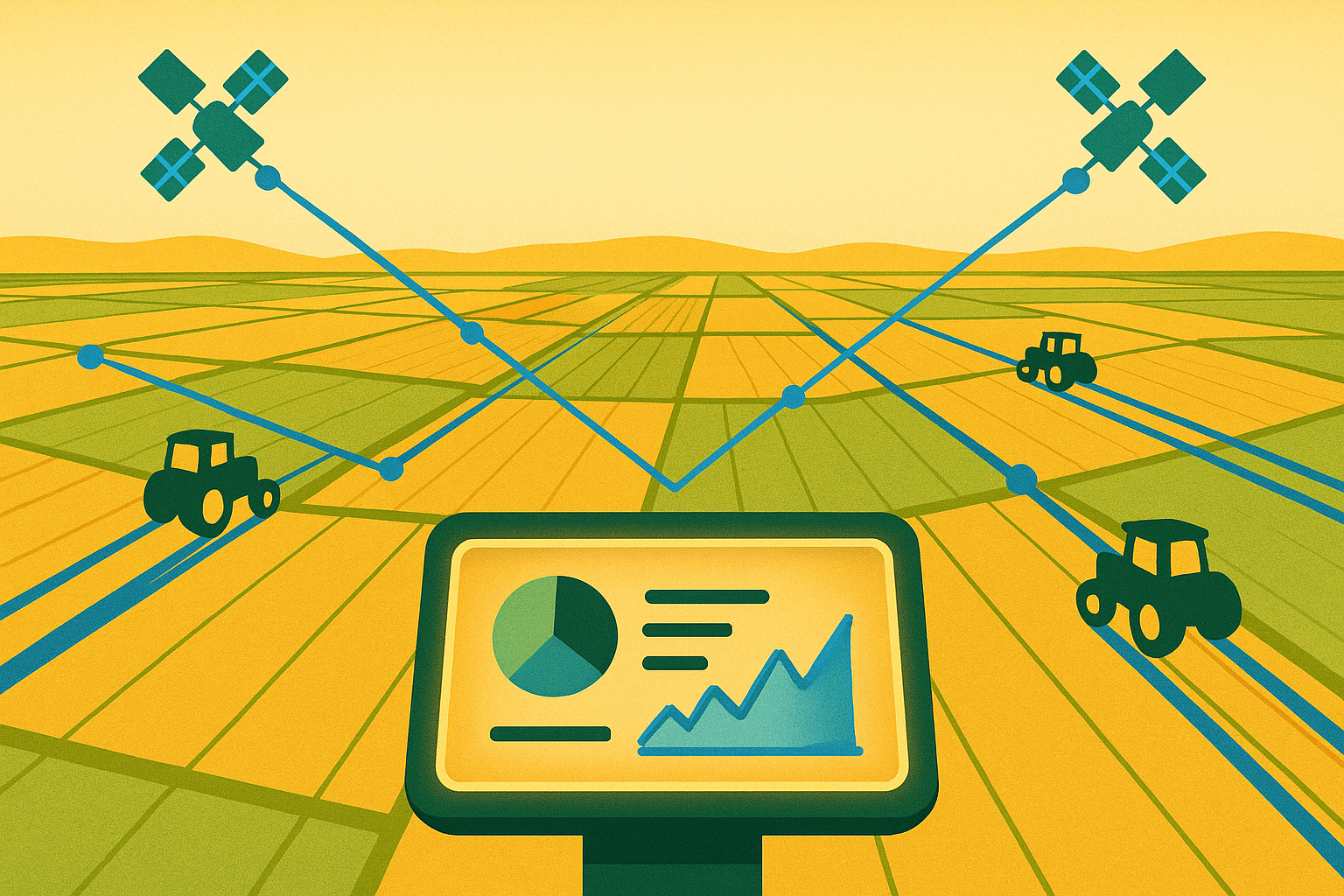
Kazakhstan uses a cloud-native platform to track agriculture, boost efficiency, and save resources across its vast steppes.
Kazakhstan's Digital Farming Revolution: How AI is Boosting Yields and Sustainability
In Kazakhstan, a digital farm platform is showing promise in boosting yields, saving water, and transforming its vast agricultural landscape into a real-time laboratory. Since early implementation, this cloud-native system has been tracking agricultural inputs and weather across significant portions of the country's farmland. Ingesting substantial amounts of satellite data and drone imagery, the platform delivers critical alerts to farmers via a Telegram mini-app, pioneering a new era of data-driven, sustainable agriculture.
How is Kazakhstan using digital agriculture to improve farming efficiency and sustainability?
Kazakhstan's national digital agriculture platform leverages a cloud-based system to analyze real-time data from satellites, drones, and on-farm sensors. By monitoring crops, fuel consumption, and weather across extensive agricultural areas, it provides farmers with actionable insights to optimize resource use, reduce costs, and improve crop yields.
The platform's architecture integrates the Agriculture Ministry's "JerInSpectr" land-cadastre map with data from private contractors, including vegetation health indices (NDVI), soil-moisture probes, and tractor telematics. All data streams are processed on an Alibaba-cloud Spark cluster, where machine learning models predict crop emergence rates. During recent spring campaigns, these models have shown promising accuracy rates across substantial test areas, according to industry reports.
"Digital tools must be applied at every stage - from planning and process monitoring to accounting and the sale of finished products."
- Government agricultural officials in recent policy briefings
Tangible results are already emerging. In the Kostanay region, farmer cooperatives have reported significant fuel consumption reductions after the platform identified overlapping tractor paths across extensive wheat, barley, and oilseed operations. Simultaneously, authorities have used platform-generated heat maps to reclaim substantial amounts of idle land. This contributes to a national effort that has returned significant hectares to the state in recent years, with a substantial portion already re-leased to operators who must share telemetry data.
Beyond field-level efficiency, the system is a powerful tool for economic policy. A new AI chatbot screens subsidy applications, substantially reducing error rates according to government reports. This innovation has reportedly saved considerable amounts in incorrect payments. The chatbot also provides precise recommendations for seeding and fertilizer, a feature that has seen extensive use during recent planting seasons.
Given Kazakhstan's climate risks - including projected declines in glacier-fed river flow in coming decades - the platform's water-saving capabilities are geopolitically significant. On demonstration fields, irrigation schedules optimized by reinforcement-learning agents have shown promising water consumption reductions while preserving premium wheat quality. Scaled nationwide, this could save substantial amounts of water annually - enough for major urban centers.
Early pilot results from agricultural demonstrations show promising improvements across multiple metrics including fuel efficiency, subsidy application accuracy, yield prediction precision, and water usage optimization, though comprehensive data is still being collected and analyzed.
The next phase involves exploring tokenizing forward contracts on a blockchain. This would allow farmers to use their future harvests as collateral for loans. Early pilots in the Kostanay region have successfully tested converting projected wheat harvests into digital tokens, unlocking substantial operating loans at favorable rates.
Neighboring countries are taking note. Uzbekistan is exploring data-sharing protocols, and Kyrgyzstan has requested access to the platform's snow-melt forecasts. The UN's regional commission (ESCAP) has highlighted Kazakhstan's system as a model for drought early-warning systems across Central Asia.
"Our digital platform is evolving from a simple accounting system into an intelligent agribusiness management tool."
- Agricultural industry leaders
The project serves as a unique, country-scale sandbox for global technology vendors. One European integrator is adapting its customer-scoring algorithms for tractor fleets, aiming to provide real-time depreciation models for equipment finance. The firm is also developing on-premise data solutions to comply with Kazakhstan's data residency laws, potentially unlocking the wider Central Asian market.
The platform's ultimate success hinges on trust. Farmers need assurance that data sharing won't lead to new taxes, while the government must demonstrate the fairness of its algorithms. Although participation is currently voluntary outside pilot zones, sign-ups are growing steadily, driven by word-of-mouth about cost savings. If current trends continue, the platform could cover substantial portions of Kazakhstan's arable land in the coming years, creating a vital data asset and a potential blueprint for feeding a changing planet.