
Central Asia: New Frontline in Global AI Race

Alexander Bazilevich is a CRM expert and Top Salesforce Partner with over 17 years of sales experience in the IT industry. He specializes in transforming corporate goals into profits through cross-functional collaboration and innovative business solutions, with deep expertise in business systems and IT products.
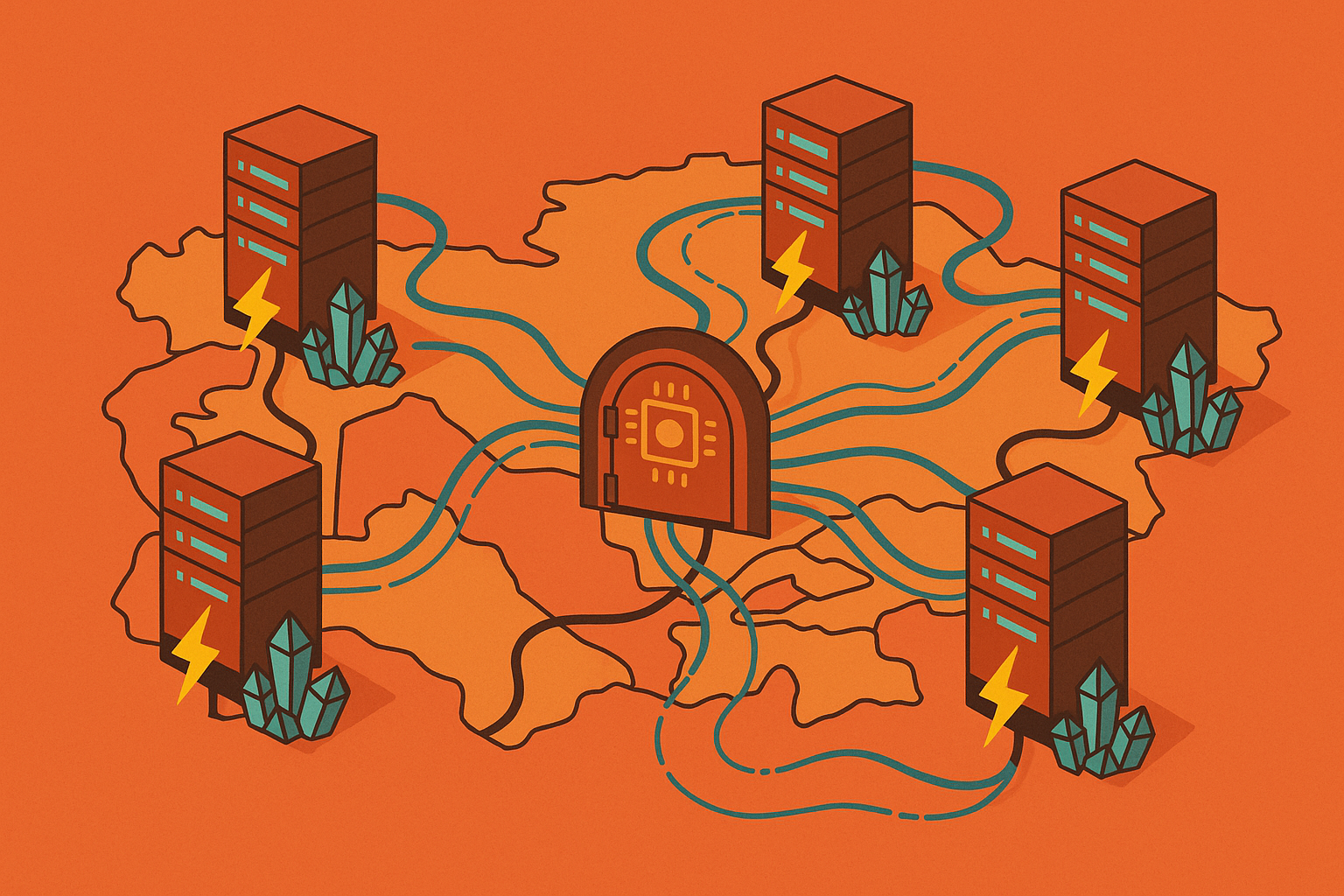
Central Asia emerges as a key frontier in AI competition, leveraging its energy, minerals, and data to build sovereign AI infrastructure.
Central Asia is emerging as the new frontline in the global AI race, a strategic arena where control over data and computation is paramount. The region's five republics are transitioning from suppliers of raw materials to pivotal players, courted for their abundant electricity, critical minerals, and strategic fiber optic routes. As nations like Kazakhstan pioneer sophisticated data governance and build sovereign compute capabilities, global powers are vying for influence, making Central Asia's technological trajectory a key indicator of future global leadership in AI.
Why is Central Asia becoming crucial in the global AI competition?
The region possesses the core ingredients for AI dominance: critical minerals for hardware manufacturing, low-cost energy for power-intensive computation, and strategic data corridors. These assets, combined with developing data sovereignty policies, position Central Asia as a key strategic battleground for global technological leadership.
Central Asia is emerging as a key player in the global AI race due to its vast mineral reserves, cheap electricity, and strategic data infrastructure. The region offers essential resources for AI supply chains, hosts strategic fiber routes, and is shaping policies to govern and localize data for competitive advantage.
From corridor to compute hub
The region's geography, once prized for the Silk Road, now provides critical east - west fiber routes and north - south energy grids capable of powering industrial-scale GPU clusters. Industry analysts note that control over data flows, computational infrastructure, and algorithmic architectures has become as critical as control over borders and airspace.
This strategic importance is underscored by the region's vast mineral wealth. According to industry reports, the C5 nations together hold significant portions of global mineral reserves, including:
- 38.6% of global manganese ore reserves
- 30% of chromium
- Substantial lead deposits
These resources are vital for AI hardware manufacturing and infrastructure development.
Kazakhstan's pragmatic sovereignty playbook
Kazakhstan exemplifies the region's strategy. A recent analysis in the Times of Central Asia, titled Digital Geopolitics and AI Strategy in Central Asia, contends that instead of building a domestic ChatGPT from scratch, Astana is pursuing "computational sovereignty through three pillars".
| Pillar | Status |
|---|---|
| Local compute | National supercomputer initiatives and cloud infrastructure development |
| Applied AI | Fine-tuned open-source models for oil, agriculture, finance |
| Ecosystem | Growing startup ecosystem and venture funding initiatives |
The same article underscores the gravity of this path, noting that choosing an AI vendor for Kazakhstan is "a fundamental decision tied to national security and long-term competitiveness".
Data residency rules vs. global cloud
Kazakhstan has implemented data-localization requirements that mandate certain personal data be stored on servers within the country. While this initially deterred some global cloud providers, it has now fostered a market for hybrid deployments. This model allows multinationals like L'Oréal and STADA to use global platforms such as Salesforce while storing Kazakh customer data in local facilities, creating a practical template for regional neighbors.
The Digital Silk Road 3.0
China's Digital Silk Road initiative has evolved from simply laying fiber to exporting comprehensive AI ecosystems. According to industry reports, Beijing now packages AI governance diplomacy, standards-setting, capacity-building, and service-layer platforms. This strategy is being implemented through various projects in the region, including Smart City initiatives in Tashkent and Bishkek utilizing advanced surveillance systems.
Energy + AI convergence
Abundant energy is Central Asia's decisive advantage. With rapidly growing AI workloads demanding increasing amounts of electricity globally, the region's low-cost power is a major draw. Soviet-era hydroelectric dams and new Kazakh nuclear facilities provide surplus electricity at $0.02 - $0.04 per kWh - roughly half the EU average. This potential is being actively marketed to investors through various regional conferences highlighting Central Asia's potential as a hub for technological growth and sustainable innovation.
The minerals dimension
Beyond chips and compute, AI hardware supply chains depend on minerals for components like magnets and capacitors, much of which originates in Central Asia. The Hudson Institute observes that China's Belt and Road Initiative is strategically designed so that for participating countries, "China is their central hub." In response, Washington is promoting a "friend-shoring" strategy, with U.S. diplomats engaging Astana and Tashkent to secure long-term mineral contracts in exchange for co-financing local refineries.
Practical sovereignty toolkit for policy-makers
| Tool | Purpose | Regional examples |
|---|---|---|
| Localised cloud zones | Keep sensitive health or tax data onshore | National cloud infrastructure initiatives |
| Open-source adaptation | Avoid model lock-in yet gain AI capability | Local language model development |
| Critical-minerals consortium | Bargain for preferential hardware quotas | Regional cooperation on resource negotiations |
| Transit-route licensing | Extract rents from cross-border fibre | Strategic fiber route management |
Outlook: the strategic equalizer
The prevailing sentiment in the region's tech circles reflects immense opportunity: Central Asia is at a crossroads - not defined by geography alone, but by data, infrastructure, and digital capability. AI could become a strategic equalizer if investments target education and energy infrastructure.
The coming years will determine whether Central Asian nations leverage their unique advantages in bandwidth, power, and minerals to build sovereign AI architectures or remain passive nodes in networks controlled by others.