
Cardinal Health: AI, IoT Transform Hospital Supply Chains
Alexander Shlimakov specializes in Salesforce, Tableau, Mulesoft, and Slack consulting for enterprise clients across the CIS region. With a proven track record in technical sales leadership and a results-oriented approach, he focuses on the financial services, high-tech, and pharma/CPG segments. Known for his out-of-the-box thinking and strong presentation skills, he brings extensive experience in solution sales and business development.
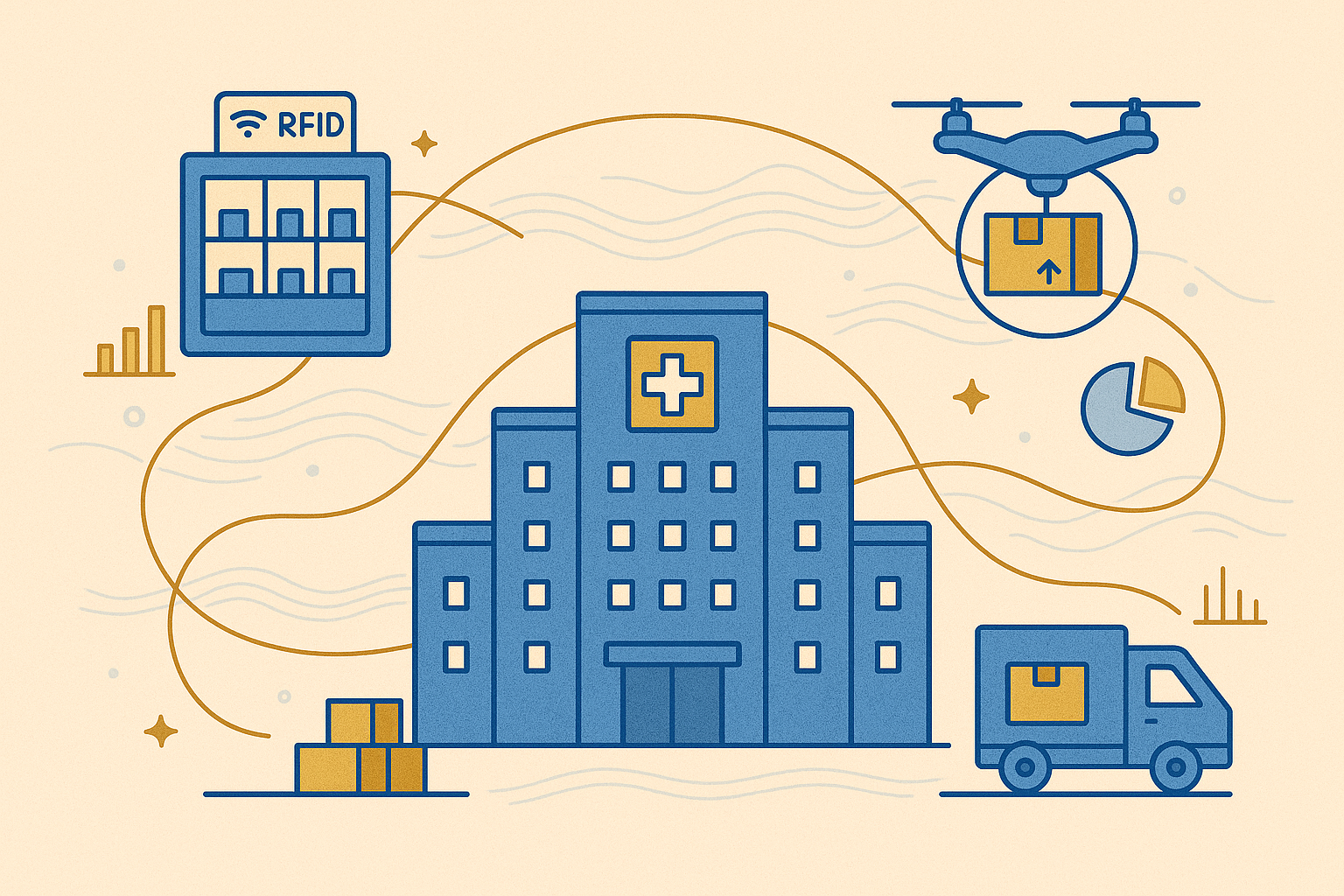
Cardinal Health's Order Express transforms supply chains with RFID, IoT & ML for real-time tracking, predictive restocking & greener deliveries.
Cardinal Health's Order Express: AI and IoT Transform Hospital Supply Chains
With its Order Express platform, Cardinal Health uses AI, IoT, and machine learning to transform hospital supply chains into data-driven control towers. This advanced system connects RFID cabinets and IoT sensors, providing a unified view of inventory from the warehouse to the patient. Early results from hospital pilots demonstrate significant reductions in stock-outs and lower carrying costs, all achieved by optimizing inventory levels without impacting patient care.
How is Cardinal Health's Order Express transforming hospital supply chains?
The Order Express platform revolutionizes hospital supply chain management by integrating RFID smart cabinets, IoT sensors, and advanced machine learning. This powerful combination enables real-time inventory tracking and predictive restocking, leading to fewer stock-outs, reduced inventory waste, lower logistics costs, and enhanced sustainability via optimized delivery routes.
How the triad works in practice
Order Express leverages a triad of technologies to automate inventory management. RFID cabinets track item usage in real time, IoT sensors transmit this data to the cloud, and machine learning algorithms analyze the data to predict future needs, automatically triggering replenishment orders before shortages can occur.
- RFID Smart Cabinets: Placed in critical areas like cath labs, operating rooms, and pharmacies, these cabinets automatically log every item as it's used or restocked.
- IoT Data Transmission: IoT bridges transmit consumption data every few minutes to a cloud platform built on Apache Kafka, ensuring a constant flow of live information.
- Machine Learning Predictions: ML models analyze real-time usage against data like scheduled procedures, seasonal illness trends, and public health signals to forecast demand for the next 24 hours.
If the system predicts a potential shortage, Order Express automatically generates a replenishment order. This order is approved based on pre-set governance rules and sent to the nearest distribution center, reducing the entire reorder cycle from days to mere hours.
"The system spotted an unusual spike in PICC-line kits three days before our weekly count," said a supply-chain director at a 650-bed Midwest system. "We received replenishment on the same truck that was already scheduled for daily delivery - no express freight, no stock-out."
Predictive restocking meets greener miles
The platform's predictive capabilities extend to logistics, creating more sustainable delivery routes. By coupling demand forecasts with a sustainable routing engine, Order Express optimizes delivery sequences, allowing a single truck to serve multiple facilities in a smaller geographic area. Early simulations show dramatic improvements:
| Metric | Baseline | With smart routing | Delta |
|---|---|---|---|
| Miles per stop | 38 | 27 | - 29 % |
| CO₂ kg per case | 0.21 | 0.15 | - 28 % |
| Average lead time | 22 h | 18 h | - 4 h |
On high-volume routes, the projected fuel savings are substantial enough to offset the software's license costs within the first year.
Integration lessons from the field
Drawing on lessons from similar large-scale projects, successful implementation depends on three critical non-technical factors:
- Establish Data Governance: A unified item master must be agreed upon before deploying sensors to ensure data accuracy.
- Prioritize Clinical Co-Design: Clinical staff, especially nurses, must be involved in the design process to build trust in the automated counts and prevent manual workarounds like hoarding supplies.
- Implement a Phased Rollout: Begin with a single, high-impact category (like vascular access) to demonstrate return on investment before expanding the system hospital-wide.
Tomorrow's building blocks
Cardinal Health is already developing future enhancements to the Order Express platform:
- Blockchain Traceability: A planned blockchain ledger will record the unique hash of every RFID tag, creating an immutable record. This will reduce the time needed for root-cause analysis during product recalls from days to minutes. Pilots are scheduled for 2026, aligning with FDA track-and-trace mandates.
- Drone Delivery: In rural Ohio, a state-approved waiver allows for drone deliveries across a 15-mile corridor between a micro-fulfillment center and two hospitals. With a 4 kg payload capacity, these drones can rapidly transport high-value biologics, and the flight data will refine the platform's machine learning models.
Early cost models suggest that a 10-pound, $3,000 implant shipped by drone avoids $200 in same-day courier fees and frees up to 1.3 nursing FTEs that would otherwise chase lost packages.
Market tailwinds
The adoption of advanced supply chain technology is supported by strong market trends. U.S. healthcare logistics spending is projected to exceed $145 billion by 2026, growing at 10.4% annually, driven by biologics, home infusion, and decentralized clinical trials. Healthcare providers applying predictive analytics to their medical-surgical procurement typically achieve a 4-7% cost reduction within 18 months, creating a self-funding mechanism for further automation.
While official case metrics for Order Express are forthcoming, the integration of RFID, IoT, and machine learning into a unified workflow is rapidly becoming the new industry standard. As this technology moves from pilot programs to enterprise-wide adoption, healthcare organizations that delay modernization risk facing higher costs and logistical disruptions in an increasingly competitive landscape.